


In the past few weeks, I’ve been thinking (and writing) a lot about how our cultural complexes affect us internally— and the importance of feeling a sense of our own power.
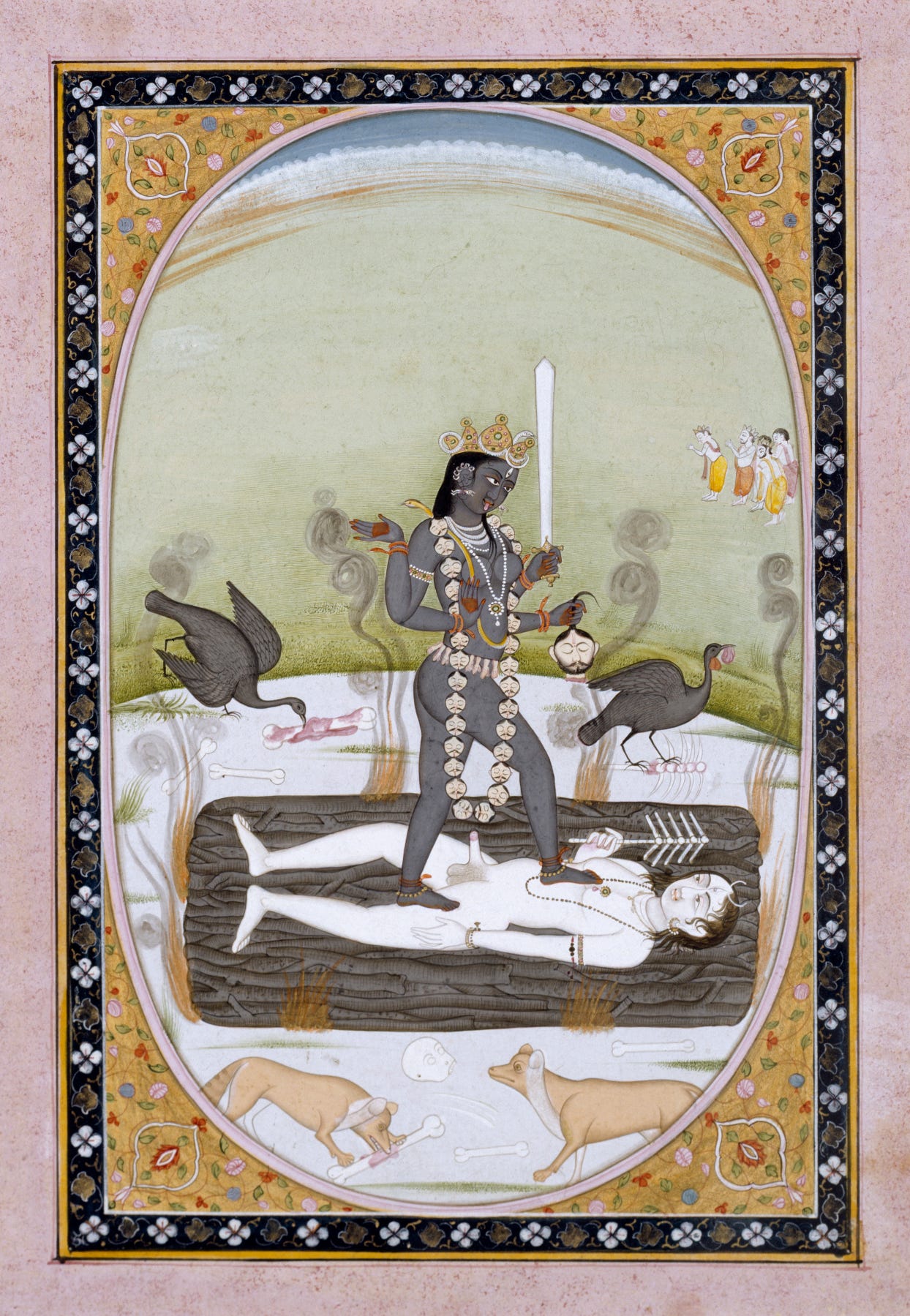
In my own dreams, I can see my personal struggles with patriarchy playing out: I’m silenced by fascists, hiding from raging men with fireworks and guns, running for my life after some men get a peek at my voting ballot; I’m disrespected, dismissed, treated like a sexual object, even assaulted sexually and violently. As disturbing as these dreams are, they are common themes in times like ours, and reveal as much about the culture we live in as they do about the psyche of the dreamer themselves.
As messages of patriarchy, white supremacy, and Christian fundamentalism grow louder and more explicit in our culture, there is a corresponding experience in each of our psyches. This can serve to make us feel more powerless, fearful, or depressed— or it can galvanize us into action.
As messages of patriarchy, white supremacy, and Christian fundamentalism grow louder and more explicit in our culture, there is a corresponding experience in each of our psyches. This can serve to make us feel more powerless, fearful, or depressed— or it can galvanize us into action.
This is why I’m such an advocate— for those of us who may be feeling less empowered, who are feeling that it’s not safe to speak up, or even to be our authentic selves in public spaces— that we work actively to develop our power and strength.
This starts with learning how to be angry.
Anger isn’t evil
Our religious or spiritual programming may have taught us that anger is dangerous and harmful to others and ourselves. It’s certainly true that unchecked anger is incredibly powerful, and can be the source of a lot of suffering. But anger is a natural human emotion that arises when our boundaries are crossed; when our loved ones are threatened; when injustice arises. Allowing ourselves to have anger is an important part of balancing of the light and the shadow in us. We cannot be whole beings without acknowledging that we have anger equal to our compassion.
When we attempt to deny our anger, we project it onto others, or we push it into our shadow, where it leaks out as resentment, passive-aggressive behavior, depression, somatic symptoms (headache, gastric distress), or as outbursts of unexpected and inappropriate rage.
Who gets to be angry in a patriarchal society?
Living with a marginalized identity in a patriarchal, white supremacist culture means that not all of us will be “allowed” to display emotions in the same way. The experience will be different for each group and each individual, but we might look at the gender experience of those raised female in our culture as an experiment.
I asked a few women this week: what messages did you receive as a child or adolescent around being a girl and being allowed to get angry? Was it ok to be mad? Here’s what some of them had to say:
“It was NEVER ok to be mad. Not with my parents, not at school… I can’t even recall a therapist that encouraged my anger between ages of 13 and 18.”
“Being angry is not ladylike. Nor is it tolerated. If I showed anger it was met with avoidance and disgust. I also became afraid of anger, and would shrink into smallness around it.”
“HA! No, it's not okay to get mad. Or, you can feel angry, but you'd better not do anything to make anyone else feel uncomfortable about that anger.”
“It really wasn’t okay to show much emotion at all. Perhaps thats how sports became my outlet for nearly everything, but certainly aggression/frustration/anger…I got praise/recognition for being good, and it was okay (even helpful) to be angry.”
“I felt like if I was mad it would make my dad mad and I never wanted to make him mad.”
“Anger was not allowed. Therefore I raged…I was given no emotional regulation tools. I was very violent. My family called the police on me, kicked me out and sent me to rehab and to live with my dad. At 19 I was arrested for domestic violence. That’s when I started to address my anger.”
“I noticed early on that my feelings had no effect. I learned that the only thing to do was to swallow my anger. The result was depression.”
For many women I know, it wasn’t okay to be angry at all. Anger wasn’t ladylike; it wasn’t Christian; it wasn’t civilized. Good girls don’t get angry.
What’s fascinating to me is how each of these individuals dealt with their disallowed anger differently. Two of them found an outlet— sports, in one case, and unbridled rage in the other. The others pushed it down or turned it inward, which has its own effects: eating disorders, depression, and substance use are all ways to manage the energy of anger that cannot be expressed.
Another common theme is that for many women I’ve known, it’s hard to feel angry on our own behalf. We can imagine being angry if someone’s threatening our kid, or our dog, or even a stranger in the street— but angry to defend ourselves? That’s a lot harder.
Allowing anger to arise— without letting it overwhelm
So what happens when a “good girl” (or boy, or being— while I’ve been writing about women, this can apply to all genders) is ready to get angry? When we start to recognize that there are some things seriously wrong in our culture, or in our life? That we’re not okay with the way things have been going?
If we’ve never learned how to explore our own anger, this can be pretty messy. If we accidentally— or, on purpose, in a “rage room”— lose our tempers in a really big way— we can feel completely overwhelmed. When the dam breaks, the flood can drown us; we end up collapsing, depressed, or turning to other coping mechanisms.
Rather than looking for catharsis, my approach is to literally practice anger. Like any other muscle, we train it so that we can use it wisely and well. We do this in small and safe ways until we’re ready to practice it in the real world.
There are many ways that I work with anger, because each of us needs a different approach. I want to share two exercises with you that might be useful as a starting point. The two videos below give some basic instructions for exploration. Feel free to follow along and see how they feel— or make them your own. If you experience a challenge with these, I really encourage you to bring these to your mental health team for support!
Holding anger in the body
Depending on the individual, we may need to start with being able to hold a sense of anger in our own bodies. This can be shockingly difficult or uncomfortable. It might make us nauseous or light-headed. We might think, “this is stupid, I’m not doing it.” But if we can’t hold that anger safely, we won’t be able to express it or use it.
Discharging anger safely
Other folks may need to let out some anger in a controlled but physical way. I like using this drawing technique from Cornelia Elbrecht because it allows its to discharge a bit of anger in a decisive way while also literally making our mark on the world. We get the felt sense of having an impact in a very safe way. See what you think.
Your experience is your own
I’m always aware as I write these posts that there are so many different thoughts and viewpoints that I’m not able to address. There are many women who have no problem with feeling and expressing anger, of course. And, as I noted, this experience is not limited to women— anyone who lives with a marginalized identity will have their own unique experience of what they are “allowed” to feel in a patriarchal society.
As always, I’d love to hear what you think. What is your relationship with anger? How do you work with it? And, if you try these explorations, how do they feel for you?
Until next time!
xo, Laura
Great resources! Thank you.
Thanks for sharing these! I love the drawing one, I hadn't seen that before.