


Here’s a quick reminder that Jennifer Snowdon and I will be offering our experiential “Better Breathing for Trauma” series beginning April 4. We’d love to see you there if it’s something you’re interested in. Okay! On with the post.
There are many ways to conceptualize exactly why so many of us are feeling exhausted, burnt-out, depressed, and anxious, in this particular cultural moment that we’re facing.
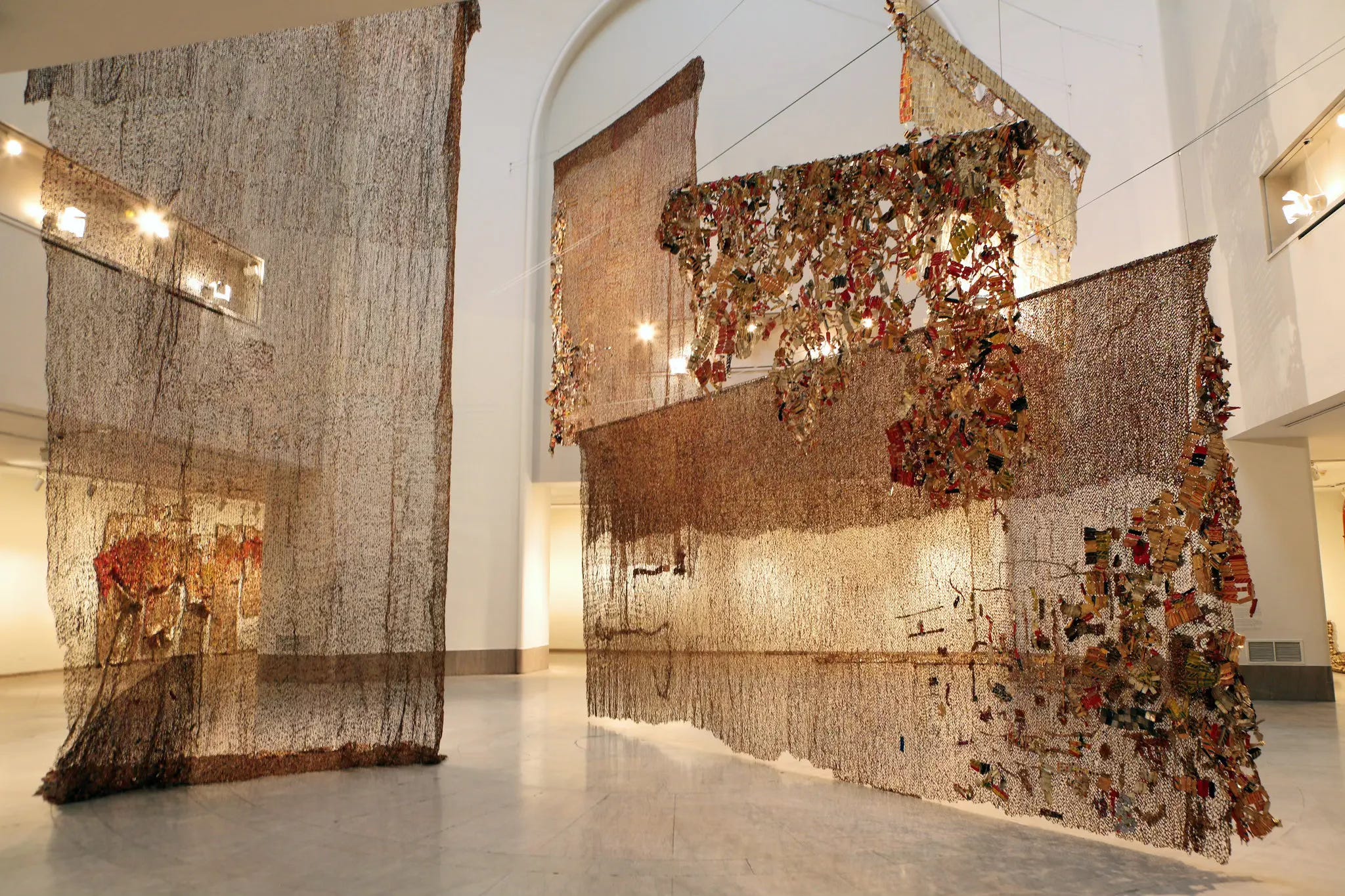
One way to understand it is that we find ourselves caught up in what is called a “double bind;” a particular kind of psychological dilemma that takes a tremendous toll on our nervous systems.
A “double bind” refers to a situation in which:
You face two conflicting demands,
You cannot satisfy both,
You cannot leave the situation; and
You cannot even name the bind without making it worse.
A classic example of the double bind is a gay adolescent living in a fundamentalist household. Their need for parental love and acceptance is in direct conflict with their need to live authentically (two conflicting demands, neither of which can be satisfied). They are dependent on their family for support (they cannot leave the situation). To name the bind (coming out) is unthinkable (it would only make the bind worse).
In the language of complex trauma, this particular kind of double bind is called "the core dilemma.” It’s the deepest kind of existential crisis: the impossible choice between authenticity and belonging. We cannot be our truest selves without risking the love and connection we need. To adopt an acceptable persona means that we receive love for being someone we are not. It’s a heartbreaking situation: we long for something that feels perpetually out of reach.
As a result of this dilemma, our very needs become threatening. If needing things leads to pain, rejection, or abandonment, we must shut down the needs themselves. We cut ourselves off, developing strategies to numb, disconnect, or disappear from a reality that has become too painful to inhabit.
The physiological cost of the double bind
The lived experience of the double bind has a distinct effect on our bodies. Trying to meet two competing demands is like having one foot on the brake, and one foot on the gas. An endlessly revving engine, our nervous system flooded with stress hormones, we can feel like we’re in fight, flight, and freeze all at the same time.
Some individuals experience this as a literal split in the body: one half moving forward, the other backward; a complex twist of bones, muscles, and fascia that has us reaching out for support at the same time we retreat from the threat of that connection. Others experience this as body twitches, nausea, or total systemic shutdown.
To live out the core dilemma costs a tremendous amount of psychic AND physiological energy: it drains our life force, leaving us exhausted and second-guessing ourselves: I just can’t get it right.
Patriarchy and the double bind
My personal anthem for the double bind is Lola Young’s 2025 hit “Messy”:
“‘Cause I’m too messy, and then I’m too f*cking clean
You told me, “Get a job,” then you ask where the hell I’ve been
And I’m too perfect ‘til I open my big mouth
I want to be me, is that not allowed?
And I’m too clever, and then I’m too f*cking dumb
You hate it when I cry, unless it’s that time of the month
And I’m too perfect ‘til I show you that I’m not
A thousand people I could be for you, and you hate the f*cking lot.”
If you’ve never heard it, I really recommend a listen— it’s incredibly catchy, and her plaintive growl gives it a resonance words alone can’t capture. Most importantly, her lyrics point to something that I believe all marginalized identities can relate to: under patriarchy, there is no acceptable way to be yourself. Beauty standards are literally impossible; if we somehow manage to come close to achieving them, we are “trying too hard,” we’ve “had too much work done,” or we’re now “dangerously thin.”
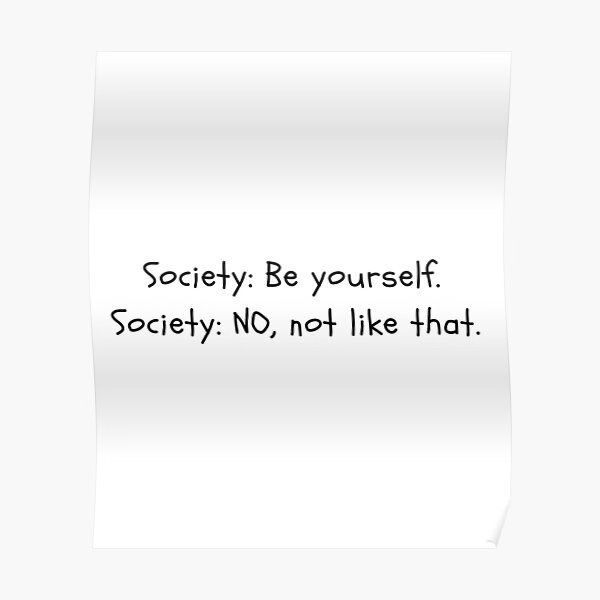
Because this hierarchy of worth is based on a system that prioritizes white male bodies, all other bodies are inherently problematic.There is no way to be authentic and to be valued. As the saying goes, this isn’t a bug, it’s a feature of patriarchy: the double bind is baked in.
The cultural “core dilemma”
On the collective level, the double bind is so much a part of our daily lives, it’s rendered almost invisible. Worse, like a child caught in the core dilemma, we’ve started to accept that our basic needs will not be met:
Trust: We want to trust, but trust has been weaponized (et tu, Cesar Chavez?)
Connection: I need community but community feels dangerous.
Safety: I need to feel safe but safety feels naive.
Expression: I want to be seen, but being seen feels increasingly risky.
Agency: I need to feel like I matter, but the system is so big— how can I make a difference?
This double bind underlies our collective exhaustion. We’re living under the impossible weight of a situation in which every move costs something, and no move feels like enough.
Loosening the bind
This cultural double bind is so immensely powerful because it hijacks a neuropsychological system that is common to all mammals— our attachment system. We have a basic need for love and belonging that is wired into us for survival; we carry this with us from infancy into our adulthood.
Yet individuals who have lived with complex trauma— which include those who have learned to live with marginalized identities in a patriarchal system— already know the secret to escaping the double bind: it must be named. By definition, talking about the double bind feels dangerous. That discomfort is part of what keeps us tied in its knots.
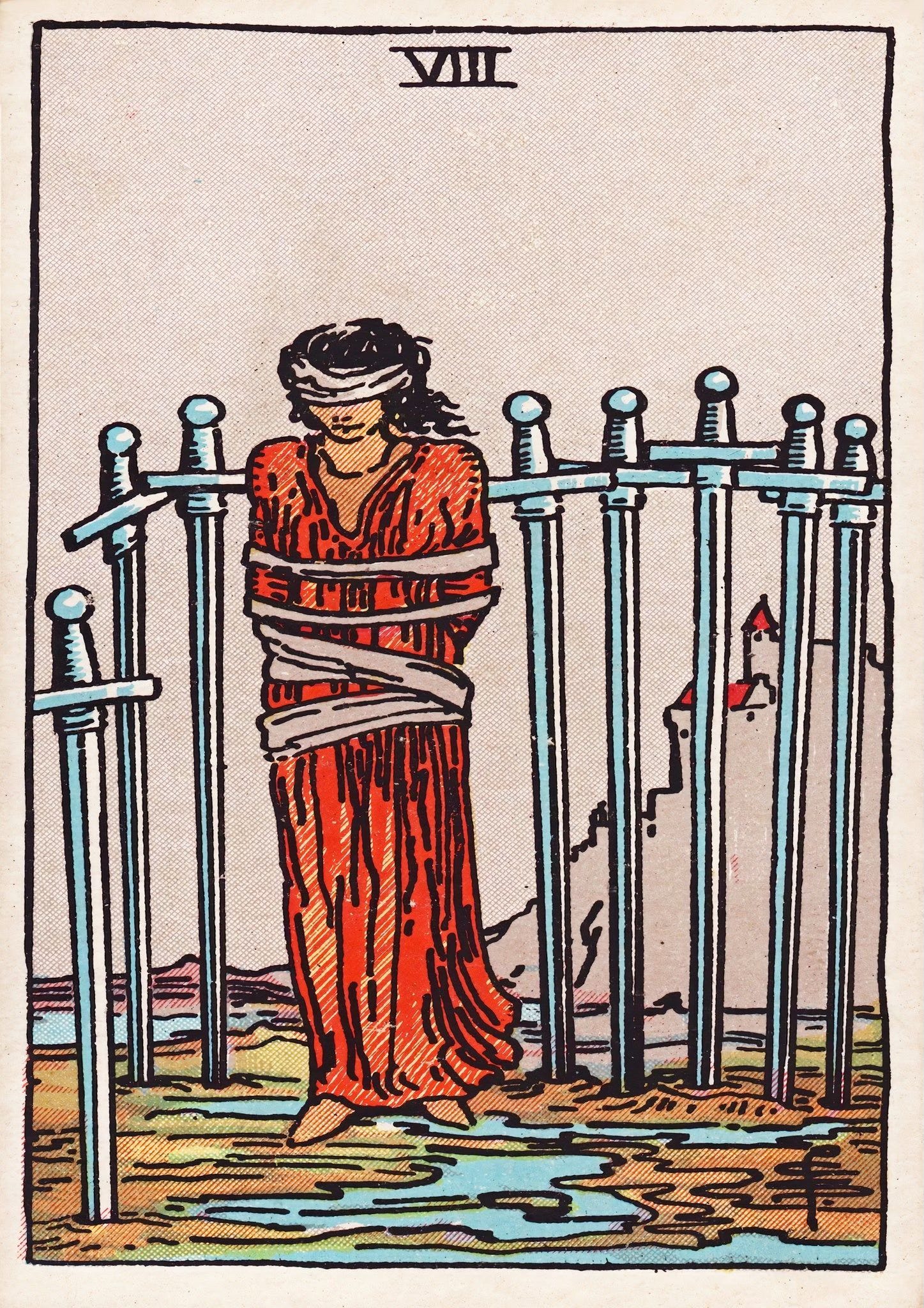
The image of the 8 of Swords from the Smith-Rider-Waite Tarot deck provides a compelling visual for the secret to escaping the double bind. These bonds are looser than they appear; freedom is more accessible than we’ve allowed ourselves to believe. The means to our escape are close at hand.
Naming the bind, as Young does in the song quoted above (“I’m too messy, and then I’m too f*cking clean”), highlights its sheer absurdity. The game is rigged. We don’t have to play this game at all; we can find another way.
But in order to see this— like the image in the card above— we must remove our own blindfold and reclaim our own power.
Beyond "regulation," reclamation: Finding our personal balance of power

“Power properly understood is nothing but the ability to achieve purpose. It is the strength required to bring about social, political and economic change.”
Jung’s individuation process
Addressing the double bind in which we find ourselves, collectively, is an unprecedented opportunity for both individual and collective change. The hypocrisy of our institutions is being unveiled publicly; our heroes are falling from their pedestals. As one of my clients recently observed: “If people can’t see the truth now, it’s because they really, really don’t want to.”
The question is — what do we do with this knowledge? Do we put the blindfold back on and stay tied in our comfortable knots? Or do we begin to work with this tension in a way that generates something genuinely new — for ourselves, and for our culture?
Jung called this the process of individuation: the lifelong, often uncomfortable work of becoming who we actually are, rather than who we were told to be.
“It is really the individual’s task to differentiate himself from all others and stand on his own feet. All collective identities, such as membership in organizations, support of ‘isms,’ and so on, interfere with the fulfillment of this task. Such collective identities are crutches for the lame, shields for the timid, beds for the lazy, nurseries for the irresponsible.”
— C.G. Jung, Memories, Dreams, Reflections
For some of us — particularly those who have never been well served by the dominant culture’s collective identities — this recognition may come more easily. When the system was never designed for you, you learn earlier that its promises are hollow. And yet even then, abandoning our old ways of operating can be surprisingly difficult. Familiar binds have a comfort to them, however painful.
This is part of what makes this particular moment so disorienting. The blindfold is being torn off. We are being asked to recognize this double bind before we would have chosen to on our own. For many of us, this revelation is truly destabilizing. Yet it is also, in Jung’s framework, exactly the kind of disruption that makes real growth possible. We finally get “to be me,” with all the authenticity and responsibility that that entails.
Questions for personal contemplation
If you’d like a prompt to work with this, my invitation to you is to ask yourself the following:
Is the double bind familiar from my own childhood, or history?
Where do I feel that double bind now (review the list above- trust, connection, safety, expression, agency)?
What feels “impossible?”
Is it possible that there is another way for me?
Notice what your experience is as you work with these. Do you feel tired? Defeated? Excited? Anxious? How might that response be reinforcing the bind itself?
Think of a mentor or figure who was able to overcome a double bind— James Baldwin, Frida Kahlo, Viktor Frankl— what inspires you about them? How can you relate their work to your own life?
Lots of big feelings around this! Thanks for your beautiful and insightful writing, Laura!