


“But God himself cannot flourish if man’s soul is starved.”
—CG Jung, “Woman In Europe”
“No one’s gonna starve me, tell me what I can and can’t eat.”
Several of my clients came in this week talking about body image stuff, saying things like, “I haven’t felt like this in so long.” Or, “I don’t know what’s going on with me, but I just feel so fat.” “I can’t figure out why I keep thinking about this.”
I have a few ideas.
Under Trump, fat is a four-letter word
While each of them certainly has their own personal experience, I know one thing these three clients have in common, because I share it too: we’re living in an age where, more than ever, thinness is not only glorified, but is conflated with wellness, and thereby (by virtue of healthism), with morality.
If it weren’t so harmful, it would be laughable. Take, for example, the Dr. Oz ad for walking that suggests that if we all walked 20 minutes a day we could “save our country 100 billion in health expenditures.” As Josh Johnson points out, “nobody exercises to save the government money.” Yet the consistent messaging is that if we’d all just get off our asses and stop being so lazy, we’d be better humans.
And the face of wellness from this administration— as seen in THIS literally unbelievable commercial— I mean, what? What? WHAT?! Kid Rock? RFK Jr? What the actual hell is happening? “Get active and eat real food.” Drink whole milk in the hot tub in your jeans?
(If you’re screaming, “Make it make sense,” here’s a thought: this administration has consistently demonstrated a eugenicist agenda that prioritizes white, male, able-bodied, thin bodies over all others.)
In yesterday’s Letters from an American, Heather Cox Richardson reported that Trump is seeking troops to attend his upcoming UFC match at the White House and that they have to “meet height and weight requirements to be eligible.” That sounded familiar to me, so I looked back at some saved posts and found this from reporter Jane Coaston, describing guidelines for an event last year:


Then again, many of you will probably remember the soundbite of Trump calling a female reporter who was asking about the Epstein files “Piggy:”
I could cite many more examples, but I hope this gives enough of a sense of what we’re receiving in the U.S from a systemic level in terms of cultural messaging around body size and type.
(For another take on “fat”— including a rebuttal against the idea that “fat” is inherently“unhealthy”— please read this recent piece by Savala Nolan, “Some Things I Wish People Knew About Fatness.” She shares many thoughts here that I didn’t have space to include myself).
”This administration is weaponizing hunger.”
RFK Jr’s “Make America Healthy Again” campaign sounded good to a lot of people— and for good reason. Who could argue with “eat whole food” and “move more”?
But the “One Big Beautiful Bill,” already signed into law, cut $186 billion from SNAP — the largest cuts in the program's history. Now the proposed FY2027 Agriculture bill would cut further still. This begs the question: How are people going to afford this “whole” food, let alone any food at all?
“So there it is: launch an initiative under the guise of healthy eating that reduces what SNAP recipients can buy, claim you’re going to fix longstanding infrastructure and supply chain problems that help create food deserts in the first place, wait for the public to forget about those promises, then publish a federal mandate that all stores not complying with your invented policy will be dropped without making any substantial fixes to the system.”
-Derek Beres, “The gutting of SNAP is about to get much worse.”
Trump bragged recently that he has “lifted five million people off food stamps.” As Shana Minei Spence says, this is “a really weird way to say that you cut off food access.”
Registered dietician Jessica Wilson said this week,
“This administration is weaponizing hunger. Undernourished people have less energy…. cognitive capacity decreases with nourishment. There is heightened anxiety with hunger.. Creating a(n) undernourished class of people is exactly what this administration wants.”
—Jessica Wilson on Instagram
Wilson was also referring to ICE detainees who are protesting the “horrific conditions,” including inedible food, at Delaney Hall Jail. At a Texas facility, where (as of March) a family with children had been held since June 2025, the children report worms and mold in their food, as well as recurring nightmares. As Wilson says, “serving unsafe food to detainees is strategic.” It’s hard to protest on an empty stomach.
“An undernourished class of people”
Reading this post from Wilson yesterday, I was struck by this phrase: “an undernourished class of people.” Yes, it is clear that this administration is systemically withholding nourishment from individuals in detention and those of lower socio-economic status— at the same time that it is making it more difficult for those individuals to vote for change.1
At the same time, this administration has been encouraging undernourishment on a second front— both through its fatphobic messaging, and through its efforts in making GLP-1s more affordable.
You could be forgiven for forgetting about this, among all the other bizarre stories— but do you remember back in November 2025, when Trump announced that prices on popular weight-loss drugs would be slashed. This picture may jog your memory:
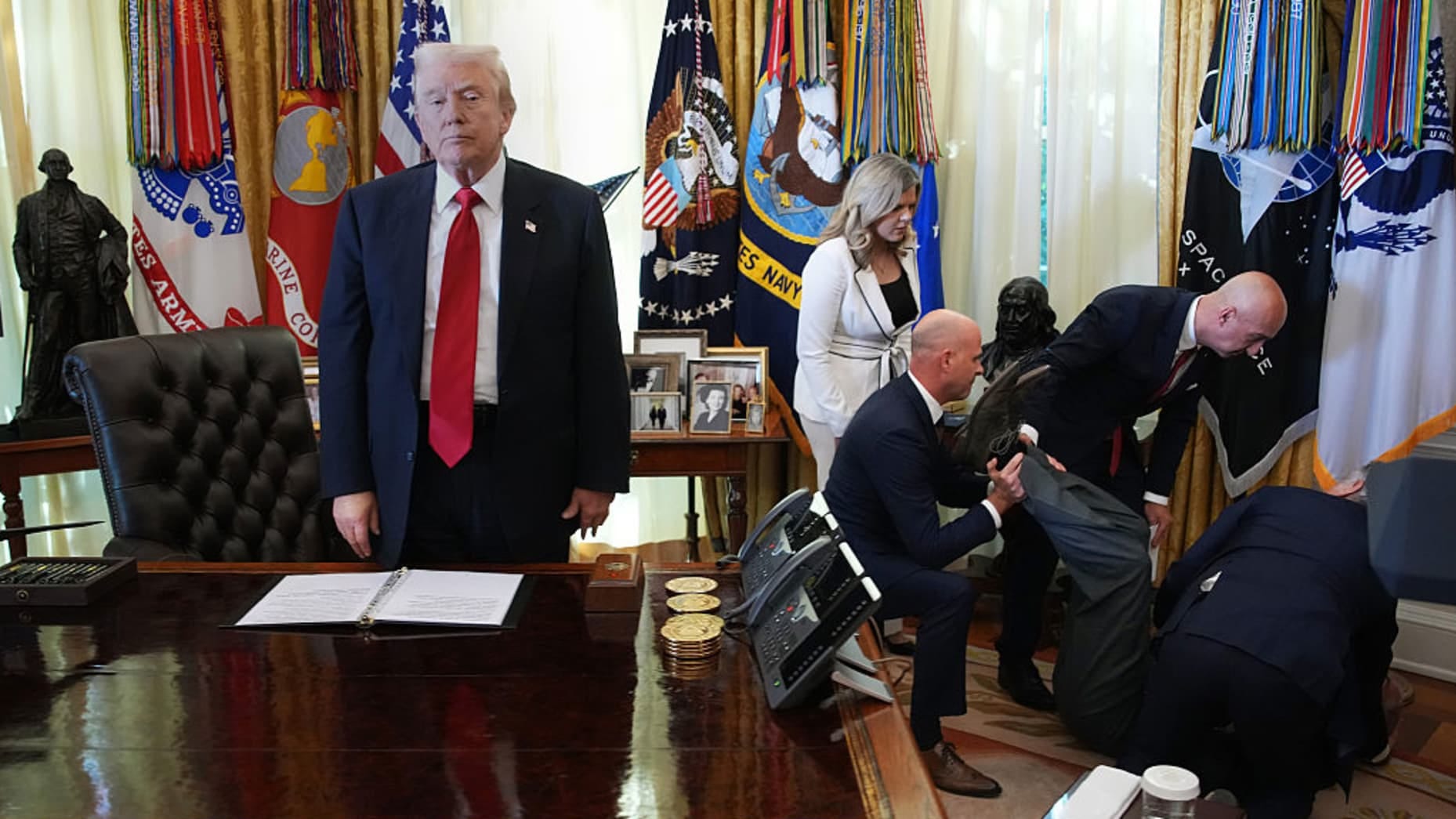
(Perhaps we should have paid more attention to the odd portent that upstaged the announcement— the person in the background who passed out cold as Trump gazed dully at the cameras).
Is it a coincidence that a weight loss drug— one that suppresses appetite and keeps us in a calorie deficit—- got cheaper, while insulin, cancer medications, and drugs for autoimmune conditions remain out of reach?
GLP-1s are everywhere, and being prescribed so casually that it’s frightening. One of my friends’ kids went to the gynecologist this week to find out why she hadn’t had a period in months. Without inquiring about anything else, the doctor said, “You need to get on a GLP1 and lose weight.” Again, this feels borderline bonkers to me, but I have heard similar things from others. When it’s now so easy and accessible to lose weight, the thinking seems to be, shouldn’t everybody?
This is extremely difficult to write about, because I am not at all interested in shaming anyone for their personal choices. I have many friends and clients who are using these drugs. As I’ve said many times before, I completely support each individual’s personal autonomy. These drugs have been tremendously helpful for many folks’ health, and in a culture that fat-shames us, choosing to make ourselves smaller is an adaptive choice for many reasons.
At the same time, GLP-1s can keep us from eating enough to stay healthy. I’ve heard from those on the drug that they forget to eat, finding themselves dizzy, dehydrated, and fatigued. It takes a concerted effort to avoid deficiencies in important nutrients like Vitamin A, Vitamin C, calcium, and zinc. Muscle loss can also be a real danger.
The net effects of all of this are that we can become, completely unintentionally, an “undernourished class of people;” a fact that is tremendously convenient for an administration that can only benefit from a less-engaged, more-passive, fatigued, distracted, population.
The Body Complex & the Cultural Core Dilemma

“Complexes are autonomous groups of associations that have a tendency to move by themselves, to live their own life apart from our intentions. I hold that our personal unconscious, as well as the collective unconscious, consists of an indefinite, because unknown, number of complexes or fragmentary personalities.” —CG Jung, The Tavistock Lectures
Reclaiming power
“The psychology of the individual corresponds to the psychology of the nation. What the nation does is done also by each individual, and so long as the individual does it, the nation also does it. Only the change in the attitude of the individual is the beginning of the change in the psychology of the nation.”
—CG Jung, The Psychology of the Unconscious Processes
One of the things that is so appealing— and so insidious— about the idea of losing weight, dieting, changing our body size, is that it feels like taking control of our lives. This is especially true when we feel powerless or helpless to create change. “If nothing else,” we think, “I can control this.” This is exactly what makes the now-more-accessible weight-loss drugs an ideal tool for a state that wants to distract and control the population. Our personal body complexes are thoroughly hooked, pressured externally by cultural messaging and relentless marketing, and internally through our own deep insecurity and desire to do something.
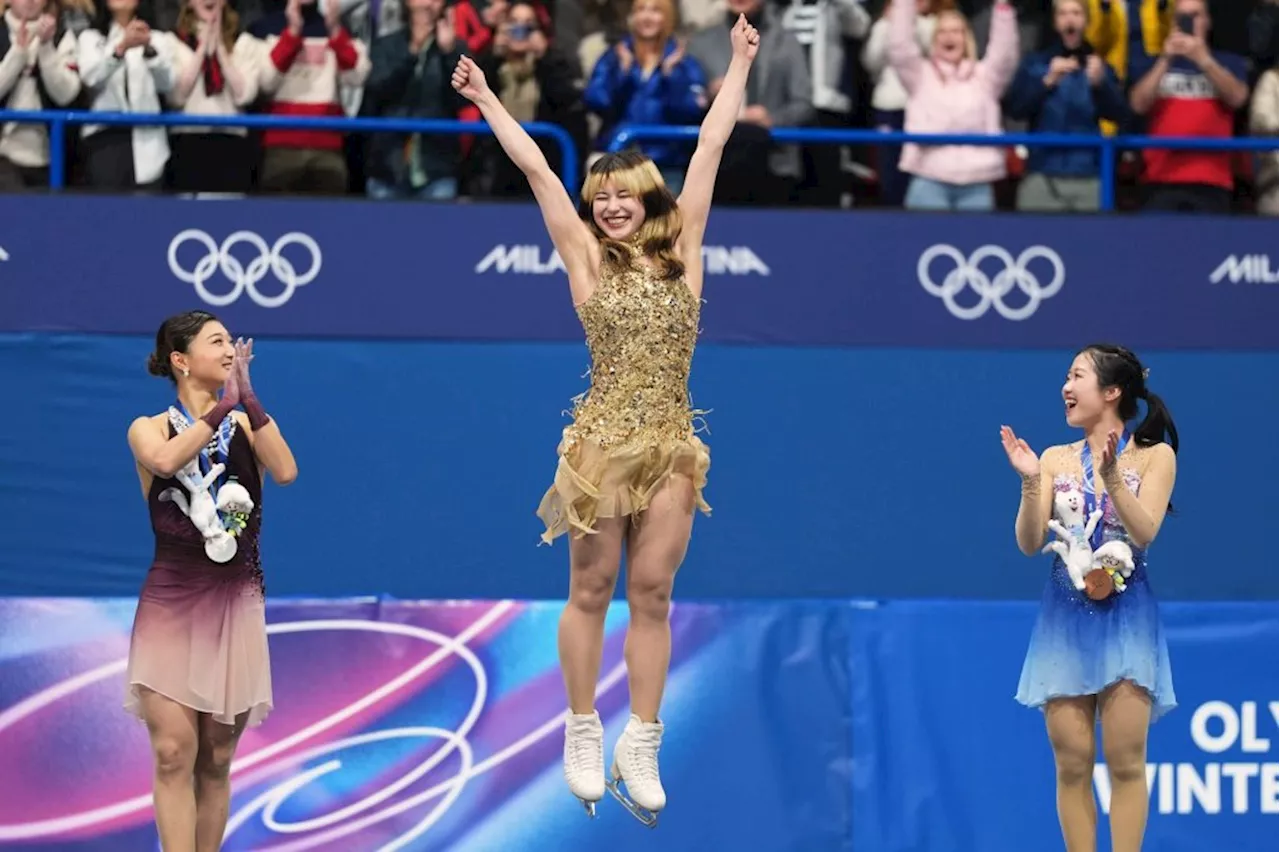
Yet at the same time, there is a counter-cultural complex at play: the strong feminine who will not be bound, starved, held back. We feel it rise in us when we watch “The Handmaid’s Tale,” or when we read “Nobody’s Girl.” We hear it in the words of Alysa Liu, who came back from a retirement— fatigued at the age of 16!— to win Olympic Gold. “No one’s gonna starve me, tell me what I can and can’t eat,” she said. She reclaimed her own power— but she knew she needed to nourish herself.
In my experience, it takes a tremendous effort to work with a cultural complex as pervasive as the one we’re discussing (call it Fatphobic, Thinness, Body Image, whatever you like). And (as is the nature of complexes), just when we think we’ve got it figured out, it pops up again in unexpected ways. It can be helpful to notice and name when it’s in play, especially if you have a friend (or coach, or therapist) who can help you to notice it). Then, we can ask ourselves: is what I am thinking really true? Who benefits from this thought or behavior? And what might be possible for me without it?
Nailed it. 👏
So amazing at writing,
my friend!