


It was the early 80’s, and I was sitting on our scratchy, faux-Persian rug, wide eyes glued to the console TV, enthralled, watching Kermit sing, “It’s not easy being green:”
It's not that easy bein' green
Having to spend each day
The color of the leaves
When I think it could be nicer
Bein' red or yellow or gold
Or something much more colorful like that…
I was just a little kid, but my insides reverberated to the mournful tone of my favorite frog’s lament. It’s not easy being different. It’s lonely, it’s isolated, it’s terribly, terribly sad.
Since writing about the double bind last week, I’ve been thinking about the double binds of my own life: the mismatch between my own needs and our culture’s expectations for me, and what is created in the space between.
A triple bind
The essence of the double bind is that one is faced with two conflicting demands, neither of which can be satisfied. The situation is not one that can be avoided, and to name the bind makes it worse.
I remember being depressed as early as kindergarten, when I learned that I had twelve more years of school to live through. TWELVE YEARS OF MISERY. How would I survive, I wondered? The future stretched before me, a bleak, anxious timescape that had to be navigated, I felt, alone.
It wasn’t just school: I cried at sleepovers and had to be driven home, ashamed, but secretly grateful to get back home to my safe, comfortable bed. At the bus stop, one morning, a (horrible) little girl said to me, “My mom doesn’t like you.” Shocked, I asked, “why?” She shrugged. “I don’t know. You’re weird.”
I mean, by typical standards, I was weird. I was devouring books faster than my parents could take me to the library. I made elaborate mansions out of old shoe boxes and played by myself for hours on end. Attempts to get me to join Girl Scouts, 4H, ballet, etc., all ended with me dropping out— I couldn’t tolerate the experiences, and I couldn’t explain why. My parents were concerned and confused by my introversion. “You have to do something,” they said. What kind of kid doesn’t want to spend time with her peers? What kind of girl just wants to stay home with her dog? This girl. This girl right here.
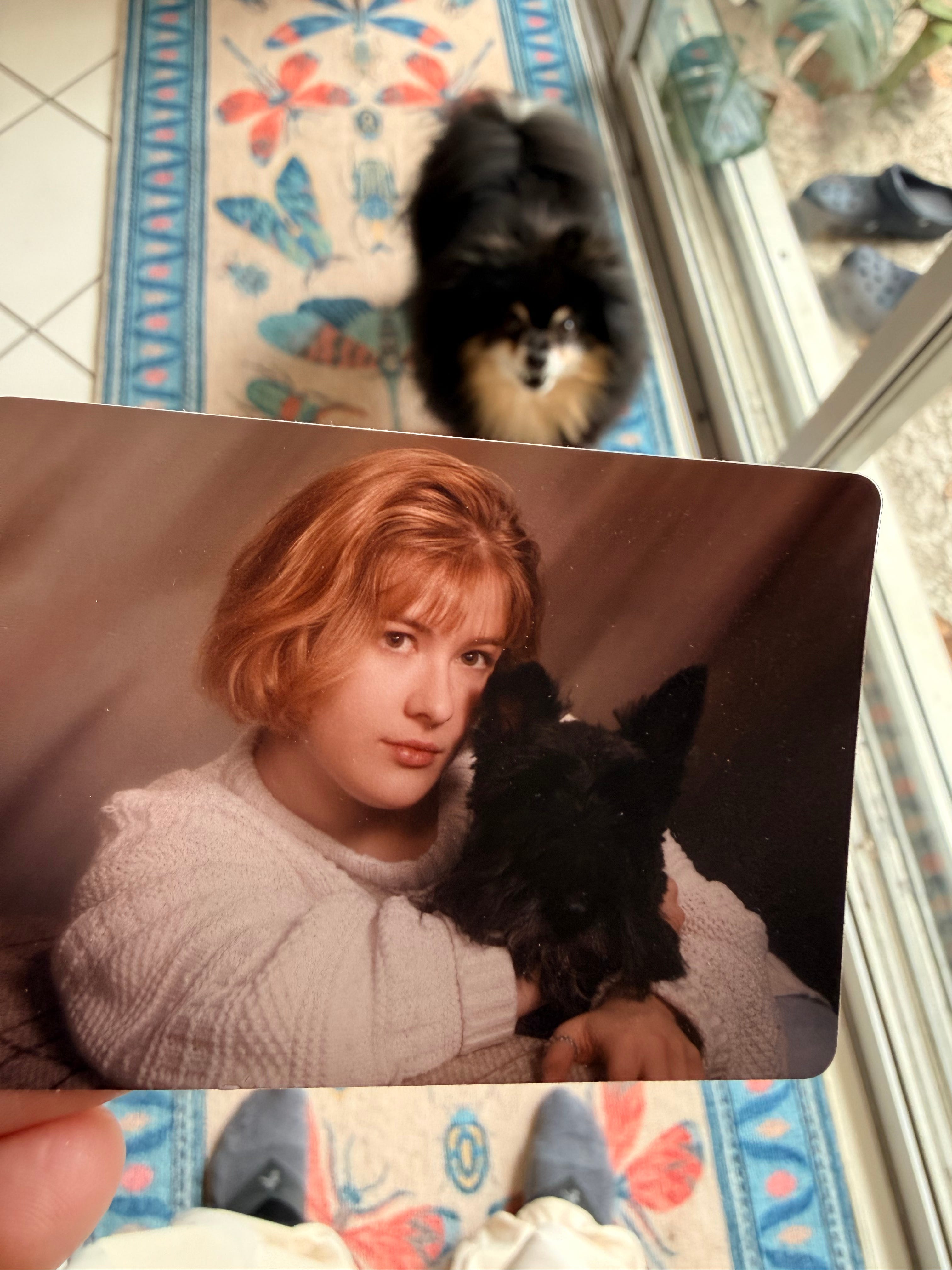
I saw my first mental health counselor in the third grade because school made me cry. This was my first taste of bad therapy; the only effect I can remember is feeling more depressed, isolated, and anxious. I had no context to understand my unhappiness (and, sadly, my therapist didn’t know enough to provide it).
I couldn’t recognize that what I was experiencing was a shocking mismatch between my needs and the environment in which I had been placed. All I knew was that I was not having the experience that my peers were having. I didn’t know what was wrong, so I learned that I must be wrong.
This is what I think of as the “triple bind:” because the bind is unnameable (in this case, I was too deeply ashamed to even consider talking about it)— we internalize the outer expectation. We learn to put pressure on ourselves to perform, and to conform. We blame ourselves when we don’t meet societal standards. Some of us— many of my clients— bind ourselves so tightly that when we finally do meet someone who is able to mirror our experience, who is able to say, “there’s nothing wrong with you.” we cannot accept that this might be true.
It is too painful to recognize what we’ve been denied.
The individuation process
While my experience sounds extreme, this is a dilemma that each of us knows intimately, because it’s at the heart of being human. Each of us must conform, to some degree, to the circumstances of our family, peers, and society. This is how we achieve a certain amount of success in life, after all: we follow rules, get an education, gain employment, etc.
In traditional Jungian literature, this conforming is the essential task of the first half of life, and that the process of individuation takes place later, at midlife, when we start to question the values we’ve internalized. Later Jungians, such as Satya Doyle Byock, author of Quarterlife, argue that this timeline doesn’t make sense in current culture. that we must grapple with the issue of what she calls “stability” vs. “meaning” as part of our developmental task of individuation much earlier than Jung stated. This formulation makes sense when I consider how very lost I felt as a kid. I wasn’t able to conform— a problem I see a lot of quarter lifers are experiencing today.
Our personal individuation journey doesn’t always follow a tidy trajectory. I was a hot mess well into my thirties, when I finally learned how to play the game well enough to have a career, start a retirement fund, buy a house. But I was still struggling with social conformity. In one memorable vignette, my boss called me into his office to say: “I’m concerned that you haven’t made any friends here.” My stomach drops, remembering that feeling. I was that “weird” little girl, five years old all over again, just waiting to get home to hug her dog and cry.
The process of individuation, theoretically anyway, is to reclaim the parts of ourselves that we’ve denied ourselves, or that we’ve been denied by the collective values of our culture. This is very difficult when we have been convinced that we are the problem; even more so when we have convinced ourselves that we are the problem. In Jungian language, these ideas about ourselves are complexes that must be recognized and integrated, often with the help of a therapist, coach, or other professional who is able to see the truths we’ve had to hide from ourselves.
Neurodivergence and Jungian psychology
Unlike Freud, who framed deviation from the norm in terms of repression and dysfunction, Jung saw psychological variation as meaningful and essential to psychic wholeness. The concept of individuation itself implicitly honors the idea of neurodiversity, recognizing that each of us has our own unique blueprint to follow.
Jung’s early work with psychosis at the Burghölzli psychiatric hospital in Zurich put him in direct contact with patients diagnosed with “dementia praecox,” which we might now call schizophrenia. Rather than dismissing their experience as nonsense, Jung recognized that the symbolic content they shared was meaningful, and that the key to helping these patients lay in meeting them where they are.
The concept of the shadow in Jung’s work refers to the parts of our psyche that lie outside of our conscious awareness, and which contain the traits and characteristics we have not been able to claim. An important task at beginning the individuation process lies in exploring and integrating parts of one’s shadow (though it can never be eradicated— Jung believed that the more conscious we become, in fact, the more our shadow continues to grow to match it!).
Neurodivergent individuals, by definition, have a more difficult time conforming to the expectations placed on them by society. Many of them learn to mask, or to compensate in ways that are ultimately costly for their own bodies and souls. We tend to praise these individuals when they “succeed” at normative tasks, not recognizing that we are denying an essential part of their psyche. For this reason, these individuals may carry an especially large shadow. This can be especially true in high performers— like myself— who have convinced themselves, through the “triple bind,” that they are inherently flawed.
Meeting ourselves where we are
This is why it is so critical for helping professionals— or even just those of us who want to be better humans— to excavate our own internalized biases. What do we think is “normal,” and are we expecting others to adhere to those expectations? Can we be humble enough to say, I don’t know what this person’s path is, rather than judging or feeling hurt by them when they fail to meet our own standards?
I’ve chosen to use both Jung’s work and the NARM model in my client work because both offer de-pathologizing schemas for addressing our complexes. Each has a compassionate lens for recognizing that outer circumstances frame our experience, while respecting the individual’s innate capacity to grow and change. What is essential in both (in my opinion) is that the helping professional set aside any personal agenda beyond supporting the client. The less we have resolved our own discomfort around our own neurodivergence, or our bodies1, the more likely we may be to stand in the way of their progress. Yet there’s room for growth, here, too— Jung saw the therapeutic relationship as being beneficial for both parties, saying, “The meeting of two personalities is like the contact of two chemical substances: if there is any reaction, both are transformed."
I don’t often claim my “neurodivergent” label— perhaps because of my own complexes around the idea— but the truth is that I have struggled my entire life to both accept myself as I am, and to assimilate to societal standards. This is an impossible task. When I hear my clients describe themselves as “too sensitive,” or “having a very gentle nervous system,” I listen for the implicit self-criticism that I know often accompanies these revelations, and I ask them to tell me about it.
It’s not easy being green. I have lost friends who cannot understand why I can’t spend as much time together as they needed (because I need so very, very much time alone). I have to guard myself against overstimulation, or I get physically ill. I suck at small talk. And after a day of working with groups at work, I will toss and turn all night as my system attempts to process all of the social/emotional information that it wasn’t able to digest. But this “too sensitive,” “gentle” system, is a miraculous instrument. It helps me tune in to others in a way that I am so grateful for. It allows me to have numinous, sensory experiences of joy and love. It let me sit down and write this piece in one sitting, because when I am passionate and focused, I cannot be stopped.
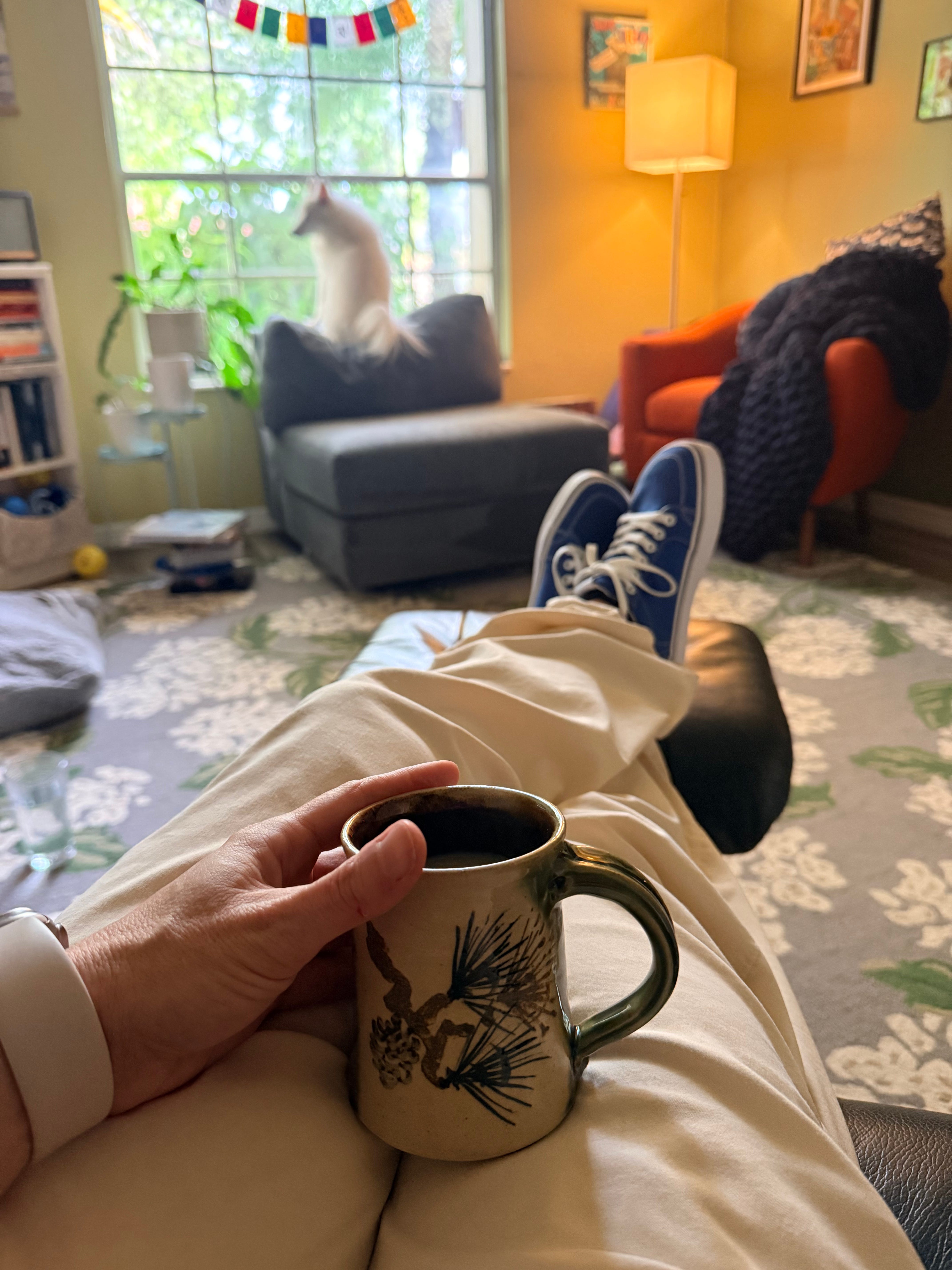
In planning this piece, I shared some of my childhood memories with my partner. “All I ever wanted to do was be home with my dog,” I said, wistfully. He laughed. “So, not much has changed.”
This, actually, is the essence of individuation. We were never lost. We were just waiting to come home."
I have a LOT TO SAY about fat phobia in the helping professions— an issue that deserves its own future piece!
I like you just as you are. 🐸
Resonate with being different and not fitting in. I, too, have always been a homebody!