


The year was (maybe?) 2010. I was working at a bank call center as an assistant manager (a career about which there is so much to say that I can only say here, I do not recommend it to you). I found myself sitting in my boss’s office, watching as he drew a circle on a piece of paper. “You see, here’s you in the middle of the circle,” he said, drawing a little dot. “You can only worry about what’s inside your circle…. the things outside the circle, you can’t control.” He sat back, satisfied with the wisdom he’d imparted.
My boss, an older white man, was doing a great job presenting me with the company line. My failure to thrive in that job— in which I was expected to, I cannot overstate this enough, SELL PRODUCTS TO PEOPLE WHO WERE CALLING IN ANGRY THAT THEIR ACCOUNTS WERE OVERDRAWN— was largely framed as my own personal failure to manage myself. If I could just organize my life properly with the recommended Steven Covey planner— internalize the inspirational message of Who Moved My Cheese— learn to take a timely deep breath once in a while— I’d achieve the kind of happiness one can only find when they’ve met their quarterly incentive goal.
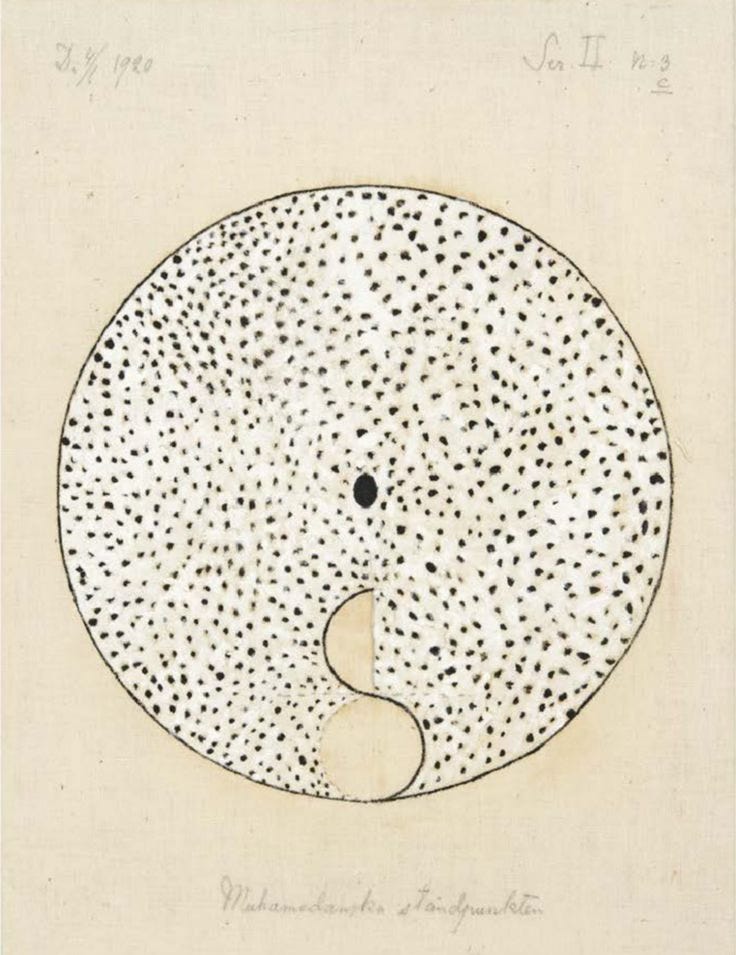
I stared blankly at the paper. My (patronizing) boss’ intervention was failing to have the intended effect. I still felt a tremendous amount of concern about the things that were outside of the circle, not because I was a moron who didn’t understand that I couldn’t do anything about things outside of my control, but precisely because I could not do anything about them, and they were directly affecting me.
Sadly, this failed to cure my depression and anxiety, but…
Here’s the thing— he wasn’t wrong, was he? I can’t control the things outside of my “sphere of influence.” But what was missing from that drawing, or at least from his explanation, was the fact that the things outside of the circle are affecting the things inside the circle. No matter how much we meditate, organize, supplement, or exercise, we are affected by external events. While some of us, due to our social position (like the man sitting across from me) have a privilege buffer that means we’re less likely to be affected, others are going to feel the strain more. That man has less to lose in a recession; he doesn’t have to worry about being deported; he can afford healthcare. That’s not true for all of us.
The idea that each of us should somehow be responsible for our own mental health is a variety of healthism that each of us, if we’ve been raised in a western culture, knows well. Like 2010 Laura, we think, “I must just be doing this wrong” if we are feeling depressed, or anxious, or affected by things outside of our control. It’s also reinforced by popular therapeutic interventions like cognitive behavioral therapy, which aims to help clients to change their thought patterns so that they are not so negatively impacted by things outside of their control. This can be quite helpful, but it can also act to invalidate individual’s experience. In many cases, it fails to acknowledge the reality of social injustice and oppressive systems that are causing the suffering, and acts to encourage folks to accept those conditions.
Accepting the things we cannot change…
It wasn’t long after that conversation with my boss that I found yoga, and then meditation. At the time, these felt like the missing link. I was able to find a sense of peace within my metaphorical circle, so that even if outward circumstances were unpleasant or difficult, I could recognize the sense of fundamental okay-ness within myself— our essential goodness or Buddha nature.
I found a lot of comfort in Tara Brach’s Radical Acceptance. “Radical Acceptance,” she said, “is the willingness to experience ourselves and our lives as it is.” This approach helped me to face my life and my own suffering more directly. It was an important first step.
Yet there was still something not-quite-right about this approach. While I don’t believe it’s Brach’s intention, and I’m certain it wasn’t the Buddha’s, any emphasis on over-acceptance can come to act as a form of spiritual bypassing. After all, as Brach says, “The boundary of what we can accept is the boundary to our freedom.” If I can just accept enough, I am completely free, right?
I am inspired by tales of Buddhist meditators who were able to endure incredible hardships due to the depths of their practice. But I’m not sure this maps well onto the Western psyche.
A few years after I left that call center job, I had purchased a yoga studio. I was spending hours meditating and practicing yoga. I was practicing radical acceptance! But I was struggling in my personal relationships. I was overworked, resentful and exhausted. Sitting down to meditate gave me a sense of relief, but it wasn’t dealing with the underlying issues.
What’s missing within this spiritual approach is a deeper acknowledgment of how the things we can’t control may be affecting us— or others— in harmful ways. We can use the balm of acceptance to soothe over the surface wounds, but the underlying infection remains.
And the courage to change the things we can
Let’s go back to that drawing. We’ve got a circle— and a dot in the middle— that’s me. If we reframe this a little, the circle represents the things that I can control. The things that I CAN change. That circle is our agency— our ability to act in the world.
The outside circumstances can’t help but affect us. But we can reckon with our own internalized ideas of who we are and what we can do in the world. The circle might be bigger than we think.
Jungian psychology tells us that our psyche is always trying to move toward wholeness, and that our unconscious mind is full of thoughts, needs, and unresolved desires that need to be brought into the light if we’re really going to be able to accept them.
Sitting in my boss’ office, I was frustrated by the “good ol’ boy” system that promoted men over women; by unequal pay; by the pantyhose and heels I was expected to wear for a job in a call center, where nobody would even see me; by the casual sexism and limited career path that was laid out for me.
What I wasn’t aware of was the ways in which the complexes I carried— for example, my inferiority complex, or gendered complexes— holding me in place internally. I kept myself quiet, thinking others didn’t want to hear my voice; I held myself back from new opportunities because I’d learned that “those weren't for me.”
While these ideas did originate “outside” the circle (thanks, patriarchy), they lived firmly inside my circle now— which means that once I knew about them, I could change them.
Each of us has the power, within ourselves, to recognize where our freedoms are limited, and to find the ways in which we can expand that sense of freedom and power. Now, some of us will need to do this in covert, subversive, or trickstery ways— it’s not equally safe for all of us to start exerting power in an oppressive society— but if we give it a chance, our psyche is pretty brilliant at showing us how to broaden its sphere of influence in a supportive and sustainable way.
So how do we find the wisdom to know the difference?
External oppressive systems become internalized oppressive complexes. How do we start to recognize and work with these?
“Agency involves seeing that what one has taken to be reality is being shaped by unconscious identifications and strategies that they developed to manage early adverse experiences.” —Lawrence Heller and Brad Kammer, The Practical Guide for Healing Developmental Trauma
In many cases, these complexes— what Heller and Kammer call “identifications and strategies”— have been a protection that we can use in order to stay safe(r) in our lives. But as adults, we can start to identify these, and to create new, more empowered strategies for dealing with our lives.
One simple way is through our bodies.
Complexes always have a feeling tone. When we are caught in a complex, we shrink, expand, flush, go clammy— something happens in our bodies to tell us to pay attention. I know that when my inferiority complex kicks in, for example, I have several physical “tells”— I often twitch one or both of my legs into internal rotation, and I feel a sense of heat in my chest that wants to curl me inward. That inferiority complex is trying to keep me safe— but it can also keep me from acting in “bold” ways, like asking for a refund when the service I signed up for isn’t what I expected. Seriously.
I have also learned to recognize the feeling of resentment as a major sign that a complex is at play for me. Resentment tells me that I’m feeling limited; often by my own expectations. If I find myself thinking, “why do they get to do that and I don’t,” I know that I need to ask myself— “Can I really not do that?” Often times, the answer is yes, I actually can do the thing— I’ve just conditioned myself to think that I can’t. I’ve limited my own agency unnecessarily.
The feeling of shame is another powerful tell. Shame is a protective function; it turns what would have been ineffective anger inward in order to maintain a crucial attachment with a caregiver or system. While this pattern begins with infants, this also functions on a larger scale: in order to stay employed, or in order to remain part of this group, we experience shame in cases where we would have a fundamental disagreement that could cause rupture. I know that if I feel that crawl-into-a-hole-and-die sense of shame in my body, I am operating from a sense of limited agency that may not be entirely true. There is something more for me to look at there.
Of course, if this were simple or easy, we’d all be experts at it. Each of these complexes operates ingeniously to maintain the status quo, both internally and externally. But once we’ve started to identify some of the places where we’re holding ourselves back, they become easier and easier to notice. And a good friend or helping professional can be invaluable to see what we cannot.
So much to say, always! If you’re still reading, thank you— and please do leave a comment and let me know how this lands for you. I really value your thoughts.
Yes, I’m still reading! 2025 Laura (and all your past, present and future selves :), thank YOU so much for sharing another ~thought~provoking post~ 🙏🏻
I never really resonated with CBT therapy..and your post helps me to see why…there is almost an unspoken patriarchal judgment implied in there that you have to do things “one way” to accept the status quo…change yourself instead exploring the possibility that external circumstances need to change..and how can we be a part of that change..or at least shift the idea that we are “wrong” and need to be “trained or fixed” but that we can open to new ways of being in the world and our own bodies…
Love the invitation to check in with our bodies…so easy ti ignore that piece and be stuck in my head..
Thank you for this insightful writing