


I wrote last week’s post on how we’re not meant to hold it all by ourselves to the inner soundtrack of Beck’s Go it Alone . I love the bouncy feel and the beat of this song— how it pulses with the sense of a solitary journey, but also (for me, anyway) echoes its refrain with lonely bravado. “I better go it alone” is a familiar refrain for me. Truth be told: Like many people who are great at giving, or at holding space for others, I find it easier to give than to receive. Ah, Beck! I feel you, man.
But why are we like that
In that post last week, I talked briefly about the neurobiology of co-regulation. It’s a biological imperative to hold and be held, not just as babies, but as adults. Ideally, we are able to regulate ourselves when we need to (self-soothing, which could be as simple as knowing when to eat your favorite ice cream or take a nap), but we also need to be able to interactively regulate (co-regulate) with other humans.
If we think about attachment types here, Allan Schore says that avoidant attachment types are always auto regulating (they’ve learned to take care of themselves, thank you very much); insecure attachment types are always looking for interactive regulation— someone to help them feel better (they need that spare battery human!)— but struggle to autoregulate; and disorganized attachment types, especially under stress, may not be able to autoregulate nor to interactively regulate. A tough place to be.
Some of us would rather give than receive…
Beyond attachment, there are many reasons why we may find it more comfortable to give than to receive. Perhaps this is an intergenerational pattern, or our social position has acculturated us to be a giver. Whatever the case, perhaps you, or someone you know, finds it difficult to ask for the increased capacity they need.
We all know somebody like this. Maybe you are somebody like this.
We’d rather load the dishwasher ourselves because you’re just going to do it wrong.
We’d rather do that work project alone because it’ll take more time to explain it than it will to do it ourselves.
We know we could really use a massage but really we don’t feel that bad and shouldn’t we save the money anyway?
We’re lonely, we know we could call that friend, but they’re probably busy and it’s not that big a deal. You get the picture.
For today’s post, I thought it might be fun to look at some of the archetypes of “go it alone” behavior. Archtypes give us a way to understand attitudes or energies that often feel bigger than us, older than us, or simply “that’s the way that it is.” As you read through the following, see what you notice. Do some of these sound familiar, or feel attractive? Do you recognize yourself or someone you know? Try not to take it too seriously, but have a little fun with it. Nobody is all one archetype (nor should we be— that’s dangerous); but maybe there’s something here for you to consider.
1. Atlas: “It’s my burden to bear.”
The first “go it alone” archetype we’ll look at is Atlas. In Greek mythology, Atlas was punished by Zeus for being on the opposing side during the Titans’ war. As punishment, Atlas was sentenced to hold up the heavens for eternity (though we often think of it as “holding the world” or Earth on his shoulders, it was actually the whole heavenly realm. Yikes).
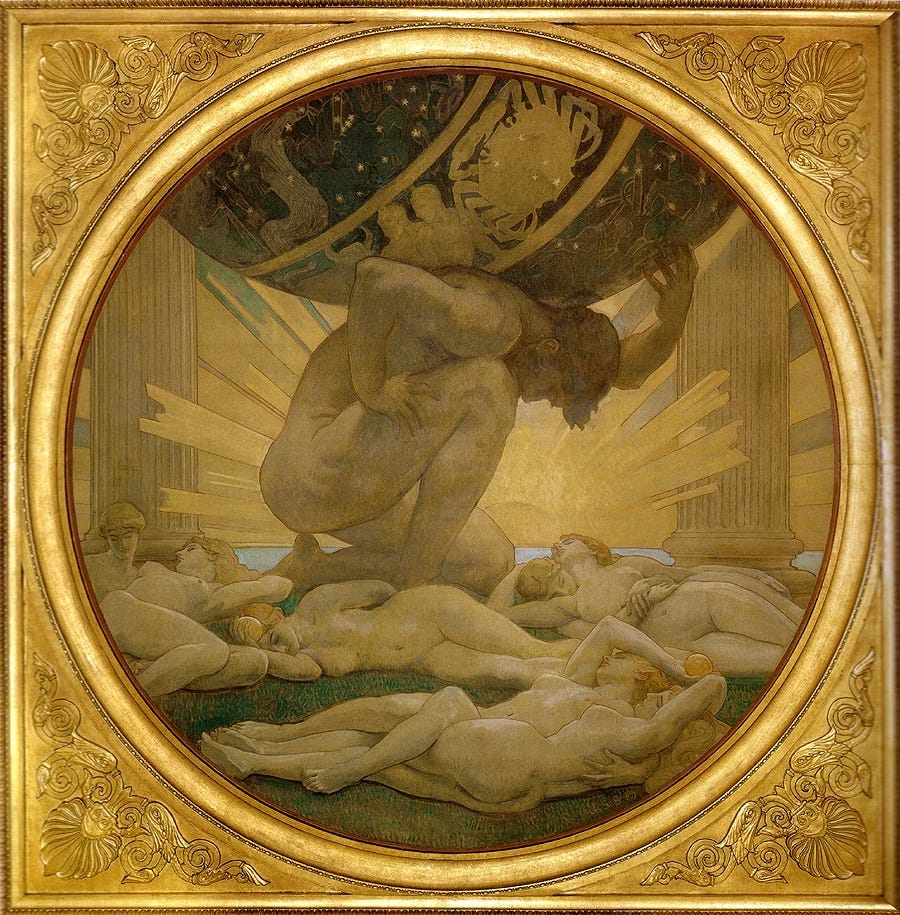
When we’re under the Atlas archetype:
we know this burden is hard, but it’s ours— not anyone else’s.
this burden is too heavy for anyone else to bear; we’ve gotten pretty good at holding it up, so we’ll just keep going.
we may feel or think, unconsciously, we deserve this burden, or this pain, or this punishment: “I should’ve known better; it’s my fault anyway.”
we can be so identified with the burden that we don’t know who we’d be without it.
All archetypes have a positive and a negative aspect. There are a lot of things to love about Atlas: his strength, his willingness to hold what feels unbearably heavy. We want to be able to call in that Atlas archetype when we have to get through something really difficult. However, if we’re always holding up the heavens, we’re not able to live a very balanced life. And at some point, that weight will crush us.
When I think about how the Atlas archetype looks and feels in our bodies, I think about the crushing weight of that burden: shallow breathing, flexed spines, gritted teeth, tense jaw and pelvic floor, a sense of forcing ourselves to keep going.
2. The Amazon woman: “I got this.”
Strong, fierce, independent, the Amazon woman is self-sustaining. Part of her power, her mystique, is that she is equal to or better than any man, even in a world that does not value women.
The Amazon woman:
doesn’t need anything from you.
actually, she doesn’t need you at all, but she’s here to take care of you.
doesn’t put down her weapons (whatever they may be); she certainly isn’t handing them to anyone else to hold.
says things like “It’s easier to just do it myself;” “I can handle this;” “Thanks, but I’m okay.”

Personally speaking, I love the Amazon woman. She defies patriarchal gender norms, and can give us the power and the strength to Handle the Business. But we’re not meant to always be in battle.
When I think about the Amazon from a nervous system perspective, I feel how deeply exhausting it is to always be charged up and ready to fight (or work). The adrenaline and cortisol we need for that sympathetic nervous system activation are great, but not as a long-term strategy— as humans, we’re meant to cycle between activation and rest, sympathetic and parasympathetic states. If we live in the Amazon archetype for too long, we risk the crash and burn that comes from an overburdened system. Amazons need a vacation, too.
I visualize the physiology of the Amazon woman as sympathetic activation: proud chest, extended spine, breath high in the chest, weight forward in the balls of her feet and ready for action.
3. The Martyr: “I serve a greater need.”
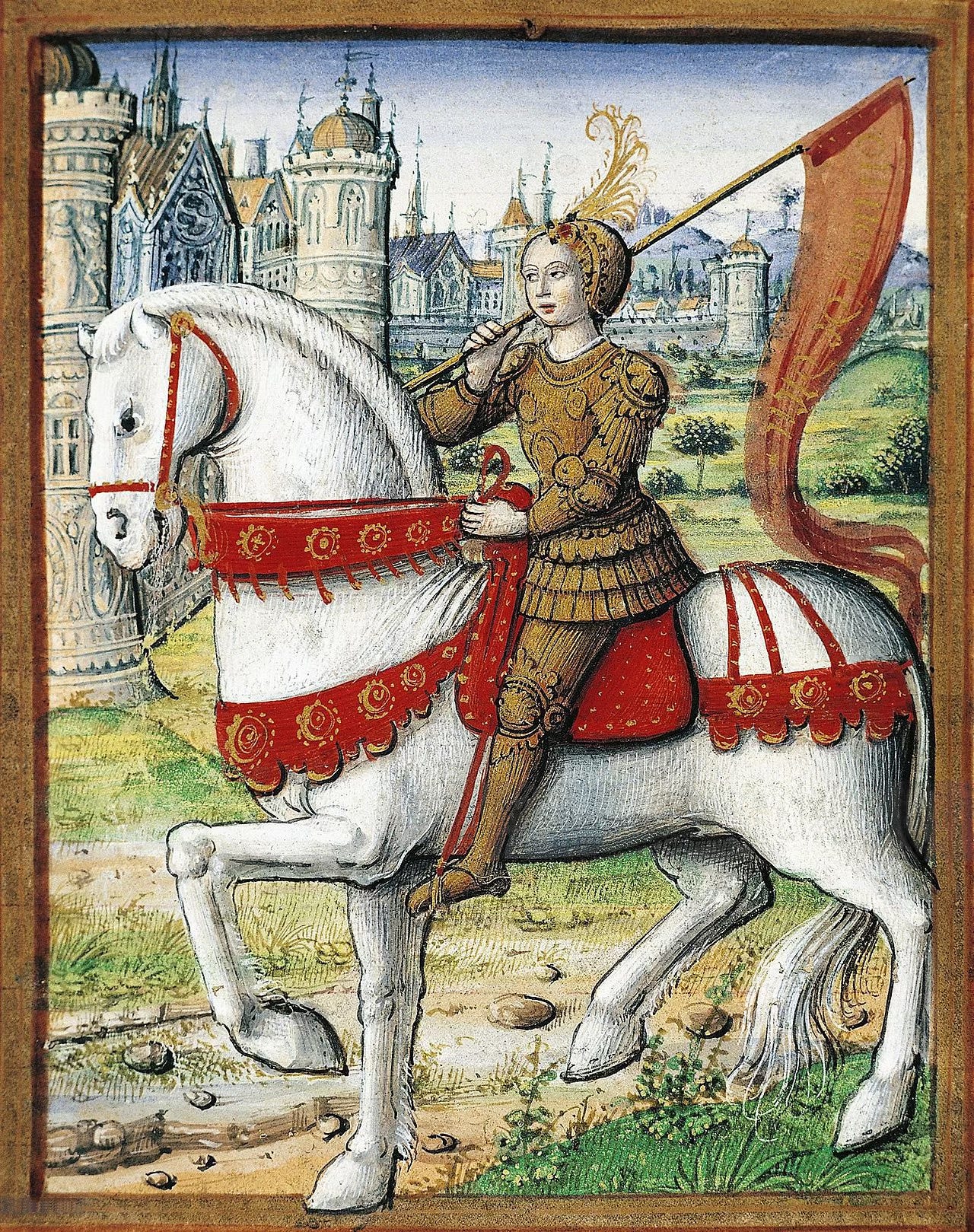
Ah, the martyr: a dangerously seductive archetype, because it is Holy, and Good, and Righteous. Whether the cause is spiritual, or social justice, or career-oriented, the martyr is wholly committed.
Like Atlas, the martyr bears the pain so others do not; she serves a Higher Destiny.
The martyr:
may feel as though they are called to devote themselves to a higher purpose.
may spend their time in work, service, or prayer, or meditation, but always for someone else.
is deeply uncomfortable with pleasure, rest, or meeting their own needs.
will neglect other areas of their life to serve the purpose.
might be a workaholic who serves the purpose of the Family— food on the table, kids in college, etc.
could be the family scapegoat, the one who lives with addictions, eating disorders, in rehab or endless therapy, bearing the pain so the rest of the family doesn’t have to.
might engage in healing work, but only because it serves a greater good.
Of course, the martyr has her positive aspects: all of us at certain times will be called to sacrifice ourselves, our time, our money, for others, or for a greater cause. Yet the martyr can only end in sacrifice. There is no fullness of life. And the shadow side of the martyr— as with all these archetypes— holds the desperate isolation and loneliness that live in the parched desert of unmet needs.
I imagine the martyr physiologically as someone who is on auto-pilot, exhausted physiologically, dissociated from their body, ungrounded, but able to keep going because they are fueled by their belief.
The strength, power, and purpose of these three archetypes resonate deeply for me, and help me to recognize on a symbolic level how much I value my ability to serve, to work, to give. Yet I also know from experience that the shadow side of always being the space-holder (and never the held) is resentment, burnout, overwhelm, chronic illness, and fatigue.
As always, I’m so curious to hear how this landed with you, and what it evokes in your body or soul. Did any of these resonate? What did I miss? I’d love to hear your thoughts and feelings on the “go it alone” archetype- share a comment below!
Resonating with the shadow side reflected in all of these archetypes.
Love this. true and comforting. I love the Amazon woman too.