


Once upon a time, a princess kissed a frog and he turned into a prince. Or so the story goes. But consider the princess for a moment. What did she see in that frog? What made her so certain there was a prince inside? And what happens when the prince isn’t everything she hoped he would be?

“Projections change the world into the replica of one’s own unknown face.”
—C.G. Jung, The Shadow
In the past few years, I’ve noticed something interesting emerging in conversations with colleagues and in the sharing circles of workshops.
We’ll start to quote someone, or mention a body of work we love, and then we hesitate. I don’t know that much about him,we hedge. I mean, I haven’t vetted EVERYTHING she’s done.
Where it once felt easy to cite a writer or discuss their ideas, we now pause mid-sentence. Did I hear there was abuse in his community? Are these theories based on solid science? Has this been debunked? Was he in the Epstein files? Didn’t she say something antisemitic once?
The rise of “cancel culture,” for better or worse, has made us more attuned than ever to the possibility that our heroes have feet of clay. And the internet is not helping. It’s full of people screaming into the void about how everyone else is wrong — and even my carefully tended Substack feed is ripe with snark and smugness. Writers eager to inform me that polyvagal theory is junk science, IFS is dangerous, Deepak Chopra is a hypocrite, and the body-positive movement is dead.
Each new revelation is another collapse. Another writer, another teacher, another healer — another fall from grace. Something darker, more cynical, starts to creep in. Who can we trust? What is still sacred? Where, exactly, is the good?
That must be one charismatic frog
What is it about certain authority figures that makes us “fall” for them? Why do we get “swept away” by certain individuals, or systems, or beliefs? How do we find ourselves “hooked,” “caught up,” “captured?” Why on earth would we want to kiss this metaphorical frog — and what makes us so certain they’re a prince?
The language we use to describe these experiences is worth pausing on. We fall for someone. We get swept away. We are caught and captured — as though by a current, or a trap, or a spell. Notice what all of these phrases have in common: the self is passive. Something is happening to us. Our volition has quietly left the building.
Throughout my career as a coach, yoga student, teacher, and studio owner, I’ve known a lot of charismatic wellness professionals. Their personality is immediately attractive in some way– they speak the right jargon, they dress the right way, they have very white teeth. In meeting them, you might think, “man, I want some of that.” Some of them have a gift for seeming to see into your soul, or to talk to your innermost desires.
Sometimes, in the yoga world, they call this kind of charisma “shakti,” which is a Sanskrit word that (in one sense, at least) means “power.” It can seem as though we’ve fallen under their spell.

Yoga teachers who carry this kind of power can do more than mesmerize with their presence — they can guide students into poses, experiences, and states of surrender that would be unimaginable otherwise. This is the gift of the mana figure. It is also, as two infamous examples make painfully clear, where things can go very wrong. (Please be aware that the following links contain graphic accounts of sexual assault: Bikram Choudhury and Pattabhi Jois.)
In Jungian psychology, a mana figure is an archetypal image of extraordinary power, wisdom, or authority — the kind of person who seems to carry something beyond the ordinary. The word mana comes from Melanesian and Polynesian cultures, where it refers to a sacred, impersonal force that can inhabit people or objects.
Mana figures appear both in dreams and in waking life — as the wise old man, the great mother, the guru, the healer, the prophet. They are figures onto whom we project our own unlived potential for wisdom, strength, and wholeness. When we encounter someone who carries this quality for us — a teacher, a therapist, a spiritual leader — we are often responding not just to who they actually are, but to what they represent in the deeper layers of the psyche.
The danger Jung identified is what he called mana inflation — the moment when either the person receiving the projection begins to believe they actually are the mana figure, or when the one projecting loses themselves entirely in devotion to it. Both are forms of psychological possession.
We see the world as we are
“Strictly speaking, projection is never made; it happens, it is simply there. In the darkness of anything external to me I find, without recognizing it as such, an interior or psychic life that is my own.”
— C.G. Jung, Psychology and Alchemy
Projection isn’t a pathology — it’s a fundamental feature of the psyche, the mechanism by which we develop, relate, and find ourselves in one another. It is how the inner world reaches toward the outer one. We are all doing it, all the time.
In one sense, we never really see each other at all. We are each projecting onto the other our own hopes and fears, our history, our unique constellation of ideas about the world and ourselves. As Anaïs Nin wrote, “We don’t see things as they are, we see them as we are.”
Perhaps you can recall your first encounter with a figure who would turn out to matter. That friend who would prove so challenging. The romantic partner who took a piece of your heart when they left. The actress who always inexplicably mesmerized you. The pet who reminded you of the childhood dog your mother never let you have.
When we feel that magnetic pull — that je ne sais quoi, that ineffable spark, a sense of karma or destiny — we know that something especially powerful is in play. A projection has found its hook.
Our shadow, our “missing piece”
“A projection rises from a neglected but dynamic value within us; usually it is essentially unconscious, but has a certain energy, which, when we have not attended it consciously, escapes repression and enters the world as a hope, a project, an agenda, a fantasy, or a renewal of expectation. No one rises in the morning and says, ‘I will make a projection today,’ but we all do. What is unconscious, charged with meaning, as a certain dynamic autonomy, and is denied inwardly will appear in some guise in our external environment.”
— James Hollis, Finding Meaning in the Second Half of Life
What we see in the other is a fascinating mystery. We are projecting something we have not yet consciously claimed in ourselves — what Hollis calls “a neglected but dynamic value within us.”
We feel ourselves to be incomplete. Like the protagonist in Shel Silverstein’s The Missing Piece, we sense that something essential is absent — and we go looking for it in the world.
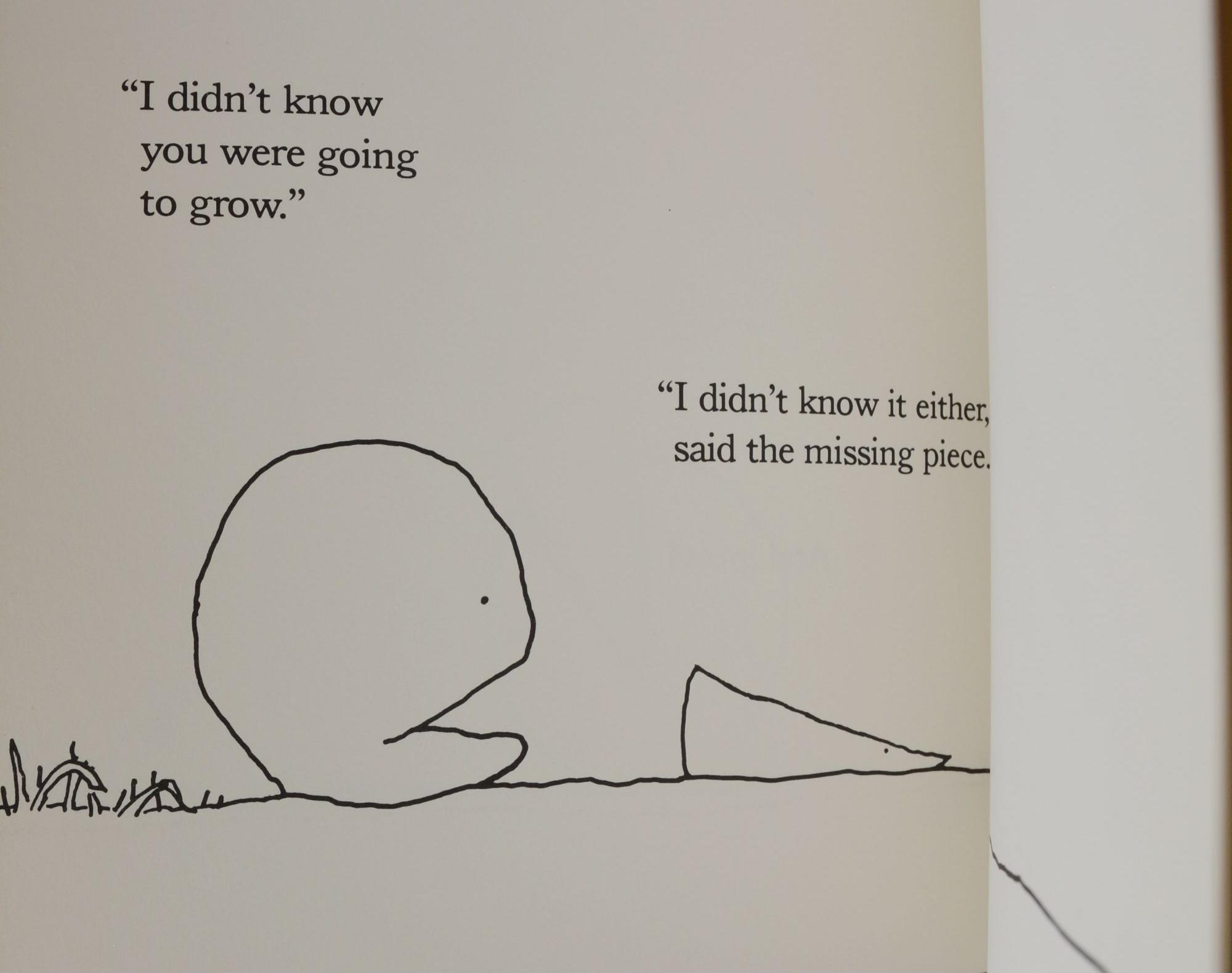
But what feels missing can never be found externally. It is a part of ourselves that was denied, repressed, or never allowed to be fully claimed — projected outward as “the missing piece” when it was never truly gone. These unintegrated parts live in what Jung called the shadow: the rich, unmapped territory of the unacknowledged self.
We can catch a glimpse of our own shadow more easily than we might think. Ask someone who their favorite public figure is — and their least favorite. Listen to what infuriates them about that neighbor, or what they love most in their closest friend. The qualities we most admire and most despise in others are almost always the ones we have never allowed ourselves to fully own.
To say this plainly:
Our heroes and our villains are reflections of our own unacknowledged qualities.
We kiss the frog because we’ve projected our own lost royalty onto its warts.
We see in others what we have never allowed ourselves to become.
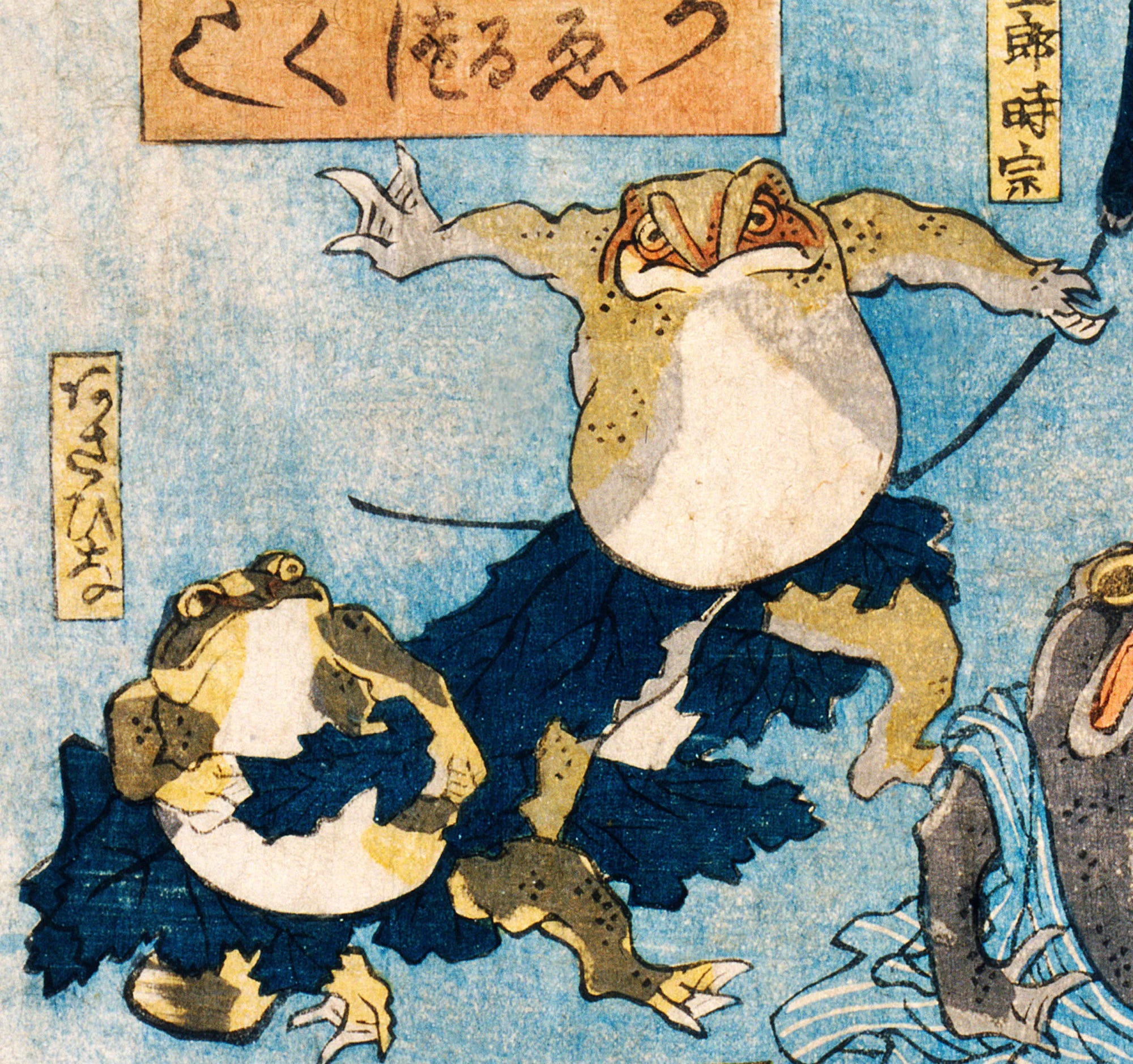
You guys, this prince is just a frog
In 2026, as we find ourselves at a global crisis point, the loss of our luminaries can feel especially painful. The spell is broken, and we find ourselves gazing at yet another frog— but our disillusionment is just projection coming home.
The withdrawal of a projection is a powerful, pivotal moment. All of the psychic energy we’ve invested in the Other rushes back to us — immediate, physical, felt in the body before it’s understood by the mind. It might be the gut-punch of betrayal, a flood of grief, or red-hot burning rage.
“Every failed projection is experienced by the ego as a frustration and a defeat,” Hollis tells us. But then he asks the question that changes everything:
“What are we going to do with that quantum of energy, that agenda of growth or regression?”
In other words — where is our power now? Where in ourselves live the qualities we’d placed in the Other? What did I love or admire about this person, this system, this community? Where have I denied myself these qualities — or been denied them? And where, now, might I begin to cultivate them in myself?
You’re still a princess- don’t turn yourself into a frog
“Who would not be drawn to a missing part of their psychological life, for that is what a projection carries, and who has not felt the power of this phenomenon? (No wonder the phrase ‘soul mate’ has become such a cliché, for aspects of our soul are involved — but we can mistakenly think we actually see them in the other.)”
— James Hollis, Finding Meaning in the Second Half of Life
For those of us with trauma histories, the moment a projection crumbles can be especially generative — or especially dangerous. Rather than meeting the situation with curiosity, many of us turn the collapse inward. We blame ourselves for having “fallen” again. We reach for the familiar comfort of shame.
This always happens to me. I’m the common denominator. I should have known better.
No matter what your shame says: it is never wrong to see good in others. It is not naïve to hope that people will behave ethically, or to go looking for good in the world. And if someone took advantage of that projection — if they used your trust against you — that is not a failure of your discernment. It is never your fault that someone else chose to cause harm.
And Jung was clear on this point — projection doesn’t land randomly. It needs a hook. Something real in the other that invites it, that makes the projection feel true. Which means that what you saw in them was not a hallucination. The good you perceived was real. It simply was not the whole story.
Every failed projection is a defeat for the ego — but a necessary one.
As we learn to recognize, reclaim, and integrate what we’ve projected outward, we become more whole. We need to place less of ourselves in others. We begin to see people as they actually are — not as missing pieces of ourselves, not as princes hiding inside frogs, but as the fully complex, contradictory, beautifully limited human beings they have always been. With that energy returned to us, we become less reactive, more grounded — better resourced for the work we are actually here to do.
PS. Reminder that we are three weeks away from the “Better Breathing for Trauma” series that begins April 4. Read more and register here!
what an amazing read. thank you