


I used to think sports were stupid.
Growing up, my family was not a “sports family.” There was no football on the TV on Sundays; when we gathered with cousins, we didn’t have impromptu baseball games. My childhood included outdoor play, but never any kind of organized sports.
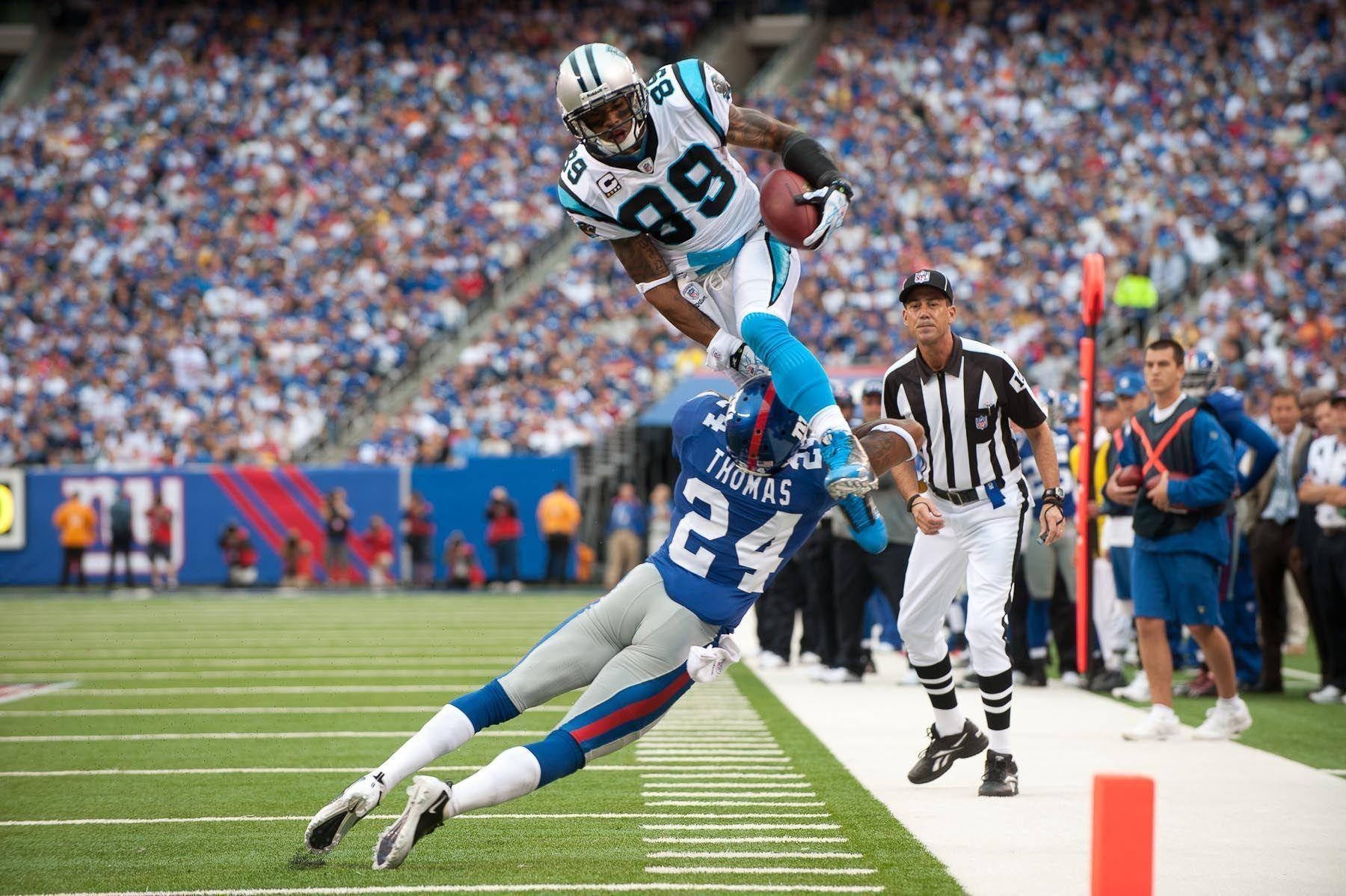
As a result, I didn’t understand the attraction. Why were others so obsessed with professional sports? It seemed like an egregious waste of time and money— all for something that, in my opinion, didn’t matter at all.
Yet all of this changed when I met my partner.
For the past 11 years, I’ve been living with a man who follows the cycle of professional sports through each season with devoted fervor. Football in the fall, basketball in winter and, for reasons I do not fully understand, hockey for what seems like 11 months out of the year. Big sports days are like holidays, with their own foodway traditions. The rise and fall of a favorite team can lift him to euphoric heights, and drop him into the depths of despair. Superstition, too, plays its part: “I had to turn it off because they were doing so much worse when I was watching,” he told me once.
The dedication he displays for what seemed to me to be a completely arbitrary set of rituals forced me to recognize that there is something deeper at play. What was meaningless to me was deeply, deeply meaningful to him (and to millions of people across this country, and the world).
What I’ve come to recognize is that for people like my partner, alliance with “your team” is a way of feeling connected to a community; it offers a sense of belonging and kinship that may be missing in our modern lifestyles.
It also provides a way to experience intense passion about something you’ve chosen to care about and a means by which we can channel emotions that desperately need expression.
Organized sports allow us to have “big feelings” in a socially acceptable way.
The importance of play
This all makes a lot of sense, if we think about it. After all, one of the functions of children’s play is to practice moving energy in our bodies, and expressing the emotions that go along with winning, losing, falling down, etc. This prepares us for the adult versions of these experiences, which, in our contemporary lives, may be less physical, but still need expression.
Physiologically, our bodies are perfectly designed to feel and process emotions. In an optimal situation, we encounter a stressor, mobilize ourselves to deal with the stressor, and the energy is naturally released— along with the accompanying emotions. You can read more about this in this post:
This is your nervous system on fascism

The care and tending of my nervous system is a big part of my life.
Unlike our ancestors, we’re not out hunting deer for dinner, or battling marauding Vikings, but we are competing with others for a job promotion, or stuck in traffic on I-95. The stress can be so pervasive that it never resolves; the emotions never get “processed.”
This is why movement can be such a powerful tool to complete the stress response. Going for a run, or taking a kickboxing class, or even playing catch with your kid, can allow us to use the stress hormones that have accumulated so that we return to a baseline state.
The additional benefit is that it gives us an opportunity to process or release emotions that are “stuck” in our bodies. If you’ve ever found yourself crying unexpectedly, or inexplicably full of rage during a workout, you know what I’m talking about. This is an organic way to practice feeling and expressing emotions. And for those of us who never had an opportunity to play as children, getting to experience the “big feelings” that can go along with learning a new skill or playing against another team is an opportunity to learn how to have emotions in a social setting— just as we are naturally “wired” to do.
Creating capacity for emotion
Feeling emotions is important, and hard for some of us. Some of us are highly sensitive people, and we struggle with feeling too much. Others seem to have a hard time accessing any feelings at all.
Our cultural discomfort with emotions is why we have things like “rage rooms” (where people pay to smash a bunch of stuff), or why some therapists suggest we do things like “go outside and scream,” or “punch a pillow” when we’re really angry. These can be useful for some folks, but for others, they don’t seem to work.
For individuals who have never learned how to express anger or rage, simply letting it all out in an uncontained environment can be pretty disorienting or dysregulating. The release feels good, but it’s often followed by a wave of shame or fear. We don’t know what to DO with this experience. It has nothing to do with our daily lives.
Without integration, context, or relational support, this kind of catharsis can actually just be teaching us this isn’t something we should ever do again.
Laurence Heller (founder of NARM, the NeuroAffective Relational Model, which I use with my clients) has a similar take. He says:
“Cathartic release can diminish the capacity to feel rather than increase it. We’re learning that we can’t hold a feeling but must release it. Instead of creating a solid container, we’re creating a sieve.”
What’s an alternative? Creating greater capacity to stay present with and to contain these powerful emotional states.
At the same time, we can’t just manufacture these emotions on demand, and it can’t be an intellectual exercise. Tearing up a tissue or punching a pillow in your therapist’s office may not have the visceral effect we need to feel real anger in our body.
Movement (or somatic) coaches have a tremendous advantage here: the human body comes equipped with the technology to feel and express emotions, and we can use our movement practices to integrate these naturally into our lives.
Kicking a ball, swinging an object, or even wrestling with another human lets us feel what it’s like to have and use emotions in our bodies. This is relational work. We need someone who can be present with our emotions without trying to fix them, change them, soothe them, or “cathart” them. The energy rises, is felt, and naturally dissipates.
This is how we learn that these emotions--which can feel like they will annihilate us-- are actually okay. They can become a natural, healthy part of our lives, rather than something to be feared.
The subtle art of sublimation
So what does all of this have to do with Monday Night Football?
While movement practices and playing sports are a physiological release for pent-up stress and emotions, the experience of being an active sports fan provides an additional psychological avenue to feel our “big feelings.”
Watching my partner scream at the referee from the other end of the couch, it is clear that professional football is serving an important purpose in his life— the ability to feel and process emotions that would otherwise not be expressed.
Freud called this “sublimation,” which psychologists describe as a mechanism by which we unconsciously redirect socially unacceptable impulses into constructive, socially valued activities.
By being part of “his team,” my partner experiences anger, elation, grief and even intense compassion when someone is injured (“Look, they’re showing the replay of his leg being broken”).
These are emotions that are a natural part of our human experience, but which most of us have not been socialized to express in our daily lives. How many of us who were socialized as males learned to express grief over a loss, or to be empathetic toward others? Those of us socialized as females may find it equally challenging to express boundaries or defensive anger. All of these might have their place at any given Super Bowl party, under the guise of “supporting my team.”
Fandom works where rage rooms don’t because it is couched in context. Screaming at a referee might look cathartic, but it’s a ritualized community experience, with witnesses to share in the emotion. There’s also a natural rhythm that echoes our nervous systems’ cycle: tension builds throughout the game, peaks, and settles when the final whistle blows. The same is true across the season: our team may lose today, but there’s a hope for a win next week.
Finding your feelings, especially when they’re big
Recognizing the important role that sports play in our culture helped me to understand- and feel closer to- my partner, and to all the other fans out there, who had previously felt alien to me. I can even recognize many of the same mechanisms in play in myself when I watch a show like The Great British Bake Off, or find myself aligning with a Jungian argument against a Freudian stance. 😂 Emotions will find their way to the surface, one way or another.
But for those who struggle to find or feel their emotions, or for those who are easily overwhelmed by them, there are ways to work with them. As discussed above, movement of any kind— whatever it is you’re drawn to— can be a great start. It’s our bodies’ natural way of discharging emotion, after all. And there’s absolutely nothing wrong with “feeling all of your feelings” while you’re watching your favorite team. Turns out that’s a great way to process all kinds of things.
If you are someone who has tried the “cathartic” methods and found them to be more dysregulating than helpful, working with a somatic coach or therapist may be your best bet. Remember that, as infants, we can only learn to feel and regulate our emotions with the support of a caregiver. If this element was missing in your own development, having relational support is critical in order to develop those skills— so the big feelings don’t feel too big anymore.
Thank you, as always, for reading! Your support means so much. Leave a comment below, or share with a friend, or re-stack on Substack, if you like— that helps more than you know. As a thank you to paid subscribers, you’ll get unlimited access to my online site of streaming practices; you can subscribe or upgrade here. And if you’re looking for relational support yourself, I now have some space for both coaching and therapy clients (as a Registered Mental Health Counselor Intern) in my practice. I’d love to talk to you about whether we’re a good fit!
Thanks for this insightful post, Laura! I feel less embarrassed about caring whether my hometown and ridiculously over-funded college football team wins 😂
My husband is also a big sports fan, and I feel many men find it a "safe outlet" to express big feelings they otherwise would have locked up somewhere inside themselves! The game is the container, a ritual to participate in; the team, a way to enact the highs and lows; the food, comfort. I think of the Knicks and how they made New York a happy place, a time to celebrate the good amid division and turmoil! Thanks for posting this Laura!