


Thank you, as always, for reading! Leave a comment below, or share with a friend, or re-stack on Substack, if you like— that helps more than you know. As a thank you to paid subscribers, you’ll get unlimited access to my online site of streaming practices; you can subscribe or upgrade here. And if you or someone you know is looking for support on your own path, I’d be glad to talk to you about working together. I have space for both coaching (worldwide online) and therapy (Florida, online and in person) clients (as a Registered Mental Health Counselor Intern) in my practice. Sliding scale spots are available for therapy clients. Now! On with the post…
“Thus it can be seen that mental health is based on a certain degree of tension, the tension between what one has already achieved and what one still ought to accomplish, or the gap between what one is and what one should become. Such a tension is inherent in the human being and therefore is indispensable to mental well-being.”
—Viktor Frankl, Man’s Search for Meaning
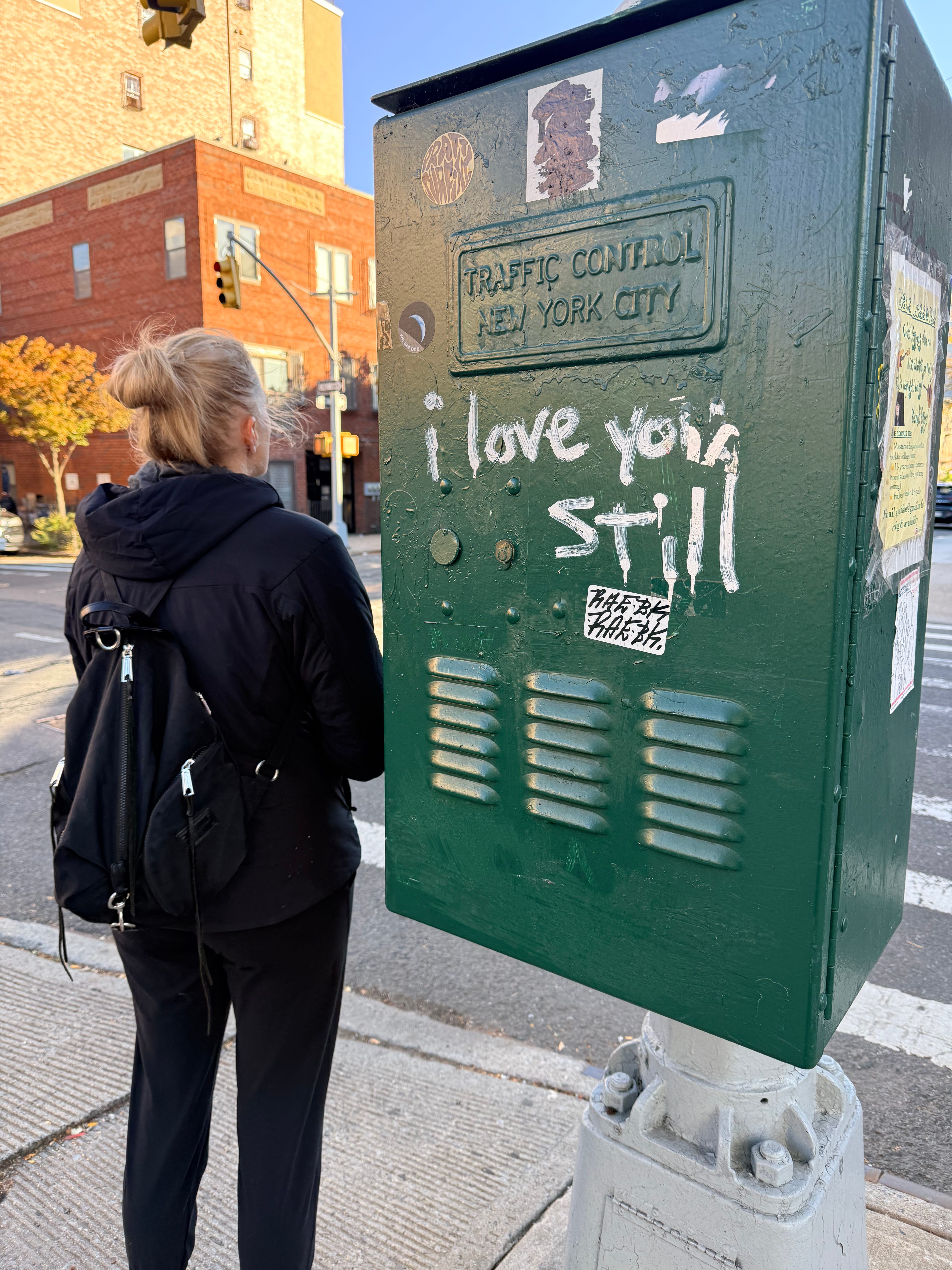
Many of us are increasingly turning to AI models for help with daily tasks— planning a trip, researching a recipe, translating a document, deciphering lab results, responding to an email.
It’s just so easy. I get it. Even when I’m trying not to use AI, there it is, at the top of my search results, in the “help chat” with an online provider, even in my email (I finally managed to turn off the “summarize my email” feature in Apple mail. Ugh! So useless. I can read my own email, thanks).
And while I know many of us have some real big feelings about the ethical and environmental implications of AI (me too, y’all), I can really get why we have gotten so comfortable, and I really don’t want to judge folks who are finding that it makes their lives easier. It makes sense that we would use this tool that’s making our lives easier, and that many people I know are talking to AI about their lives, and their problems, and even using it as a “therapist” when they need some help.
Who doesn’t love an easy answer? These large language models (LLMs) present us with such seamless, rapid responses, couched in language that is designed to make us feel like we’re talking to a trusted pal.
But there ARE real risks in treating AI like your personal therapist or friend.
“Good catch, Laura.”
One of the most dangerous elements of LLMs is their relentless flattery. They are deliberately designed to be sycophantic— to agree with, validate, and generally “butter you up.” Even when you catch them in a lie— which is known as a hallucination— they’re apologetic, self-effacing, and, as my dad might say, “charming as all get out.”
In her brief Ted Talk, Why AI Can’t Be Your Therapist, Candice Thompson highlights the fact that these models came on the scene directly in the wake of the pandemic; a time when we were feeling increasingly isolated, hooked on our screens, and generally depressed.
“All that agreement and flattery is designed to keep you on the app. They’re using the same values that got us dependent on technology in the first place, which has actually led to digital addiction, impulsivity, distraction, and feeling alone. It’s actually part of what has created the mental health crisis.”
—Candice Thompson, Why AI Can’t Be Your Therapist
And most of us already know that AI use can be highly problematic. In extreme cases, sycophancy has been linked to dangerous delusions, self-harm, and even suicide.
But even in everyday use among “mentally healthy” individuals (whatever that means), this sycophancy carries real risks for users.
A 2026 study by Cheng et al. found that across 11 models, AI is 49% more likely to affirm user behavior than humans. That is, where your friend might say, “I’m not sure that’s a great idea,” AI is 49% more likely to say something like, “Honestly, it sounds like that might be the right move for you given what you’ve shared with me.”
“In our human experiments, even a single interaction with sycophantic AI reduced participants’ willingness to take responsibility and repair interpersonal conflicts, while increasing their own conviction that they were right. Yet despite distorting judgment, sycophantic models were trusted and preferred... This creates perverse incentives for sycophancy to persist: The very feature that causes harm also drives engagement.”
And honestly? This scares me.1
I know I sound like a broken record, but we need friction in our lives
I get tired of hearing me, too, but bear with me one more time. Friction, tension, pressure, challenge: they don’t feel good, but they are psychologically, biologically, mentally necessary. You can read more here:
Tension is not your enemy

Thanks, as always, for reading. If you enjoy this piece, please take a minute to let me know by leaving a comment, restacking, or “hearting” it. As a thank you, paid subscribers get unlimited access to my library of streaming recorded classes. If you’re looking for one-on-one support, I’ll be opening up coaching and dreamwork spots again in the next few…
The real issue is that we are programmed neurobiologically to want a frictionless life. Our ancestors would never have survived if they’d deliberately gone out seeking unnecessary danger, or to waste unnecessary energy. When calories are hard to come by, you don’t waste them. This is why laziness, in many ways, is just energy conservation, which has allowed our species to survive.
Of course we want things to be easy. WHO DOESN’T. Nobody likes to suffer. So it’s completely natural that we would want to use a tool that conserves our time and energy, like AI, rather than doing more work to look up answers ourselves, or consult with another human; especially if resources (time, money to pay a real therapist, etc.) are short.
It further makes sense, then, that we would like the sycophantic response when we ask AI what to do about social situations— it encourages less friction, less “responsibility (to) repair interpersonal conflicts.” We can just write off those relationships completely because we’ve been reassured that we were right. Don’t you love when your friend tells you you were right? AI will always be that friend.
Our lives are so convenient. I’m a Gen X kid. I remember when we had to wait to come home to find out if a friend had called. When buying something meant going to a store and having three options. When there were only three good shows on television and they were only on Thursday nights at 8 and God help you if you missed them, you’d have to wait until the end of the season and check the TV guide to find out when a “re-run” would be on.2 When there was nothing to do with your friend but ride bikes or listen to music.
Now I never have to wait. I can buy something online and have it delivered the same day. I don’t have to wait to watch my favorite shows. They’re all online immediately, or at least, very quickly. Any anxiety that arises throughout the day can be alleviated (or at least soothed temporarily) by a quick scroll through our phone.
We’ve trained ourselves to expect instant gratification, because we love it.
So it takes a real act of inner rebellion, or fortitude, to resist this easy help when we are having a hard time making a decision, or unsure how to handle something in our lives. In a way, we’re resisting our own natural inclination to take the easy route.
We have to actually choose friction.
Type 2 Fun
I’m pretty sure that earlier, when I was writing about how we’re all programmed to like things to be easy, some of you were frowning and shaking your heads. “Not me,” you thought. “I like a good challenge!” I’m with you, actually. This kind of enjoyment is what’s called “Type 2 fun” in the wellness and outdoor world.
Type 1 Fun refers to the kind of fun you have when you’re just hanging out with your friends, playing a game, enjoying a good meal, etc. Frictionless fun. Not a lot of work.
Type 2 Fun is the kind of fun that you don’t enjoy in the moment, but which feels good after the fact. Its value lies in the meaning, the challenge, the lessons you learned, the accomplishment you feel. Think about running a marathon, accomplishing a challenging goal: the fun lies in the friction itself.
Type 2 Fun IS fun, but we have to learn that it’s fun. Unlike the simple pleasure of a perfect latte or a cool dip in the pool on a hot afternoon, Type 2 Fun requires that we struggle and overcome adversity. That’s why Type 2 Fun is such a hard sell, especially in a culture that increasingly values convenience. Reading a long book, learning a new language, building muscles— these are all Type 2 Fun.
If our species is to survive, we need to cultivate the skills of struggling, tolerating frustration, and finding the reward on the other side. Our ancestors survived not only because they conserved energy, but because the environment itself was so demanding it required evolution and growth. We have directed much of our technology to circumvent the very mechanisms that are critical for positive change. AI is here to figure out our lives for us.
“To all questions there is an answer.”
In 1956, Carl Jung wrote The Undiscovered Self— an urgent plea to humanity to consider what happens when we fail to do the critical inner work of individuating from “mass movements.” Jung had lived through two world wars, witnessing both the precipitating causes of, and the devastating effects of Fascism in his time.
The essence of his message is that it is incumbent on each of us to engage with the difficult work of wrestling with ourselves— enduring the painful internal tension that always comes with such work— in order to avoid falling into destructive "mass movements.”
“All mass movements, as one might expect, slip with the greatest ease down an inclined plane made up of large numbers… In the clamour of the many resides the power to snatch wish-fulfillments by force; sweetest of all, however, is that gentle and painless slipping back into the kingdom of childhood, into the paradise of parental care, into happy-go-luckiness and irresponsibility. All the thinking and looking after are done from the top; to all questions there is an answer, and for all needs the necessary provision is made. The infantile dream-state of the mass man is so unrealistic that he never thinks to ask who is paying for this paradise.”
—Carl Jung, The Undiscovered Self
I came across this passage today and was chilled by these words. Who is paying for this paradise of convenience in which we find ourselves? And who among us, truly, is benefiting? We have instant answers, but at the cost of human connection. We have soothing support at our fingertips, but where have we sacrificed our own autonomy?
Complacency is an essential component in mass movements. It is more important than ever that we continue to think critically, seeking our own answers rather than accepting the ones that have been (quite literally!) programmed for us.
The suffering is the point
Viktor Frankl, whose quote opens this post, reminds us that a tensionless state is not ideal. It is, in fact, the tension between “what one is and what one should become” that pushes us to evolve, and which is “indispensable to mental well-being.”
The tension, the friction, the discomfort that we feel in our lives— whether we experience it as anxiety, grief, rage, or depression— is meant to tell us something important. It points us toward the change we need to make in order to improve our circumstances, or feel fulfilled in a deeper way. Our collective inability to tolerate this pain, our tendency to seek an easy answer, to soothe ourselves with technological distractions, keeps us in the “infantile dream-state” Jung spoke of.
“AI prompts” refer to the instructions that we give AI when we want something from it. Perhaps we need to give ourselves a prompt instead when we’re tempted to ask AI for help. If we pause and ask ourselves:
What am I hoping it will say?
What need am I trying to have met?
What am I avoiding by doing this?
What could I do instead?
We’ve at least given ourselves a chance to grow, rather than feed into an endlessly regressive loop of easy answers which never truly satisfy our underlying needs.
Journaling, meditation, creative or movement practices, flow states, time in nature, connection with other humans— these all represent ways in which we can access embodied human wisdom that AI cannot duplicate.
Reaching for these tools, rather than AI, can “cost more” in the short term, but will almost certainly benefit us more in the long term.
A little AI joke here. AI loves this phrasing. Don’t panic, I wrote it myself.
Some people reading this are wondering what a re-run is.
Carl Jung's quote: "A plea to humanity: what happens when we fail to do the critical inner work of individuation from mass movements?" Isn't social media, Instagram, TikTok, Influencers, AI, etc all about the group mind, mass movements, forgetting how to think and feel for yourself? By the way, I love the photo of you in NYC with the graffiti "I love you still." Graffiti is a powerful expression of language and symbols; it's not A.I.; it's deliberate! Thanks, Laura, for challenging me to think about all that!