


Hi all! I know last week’s post about materialism was a little bit philosophical, which might not be everyone’s cup of 🍵. This week is a little more practical, with a short somatic check-in practice video at the end. Thank you as always for subscribing, and for your comments, likes, and restacks. If you want to support my work further, you can upgrade here. I’m committed to writing as regularly as my schedule and inspiration allow.

“(Mr. Duffy) lived at a little distance from his body, regarding his own acts with doubtful side-glances. He had an odd autobiographical habit which led him to compose in his mind from time to time a short sentence about himself containing a subject in the third person and a predicate in the past tense.”
— James Joyce, Dubliners (”A Painful Case”)
Another way to conceptualize our cultural mind-body split is to say that we are suffering from a collective state of dissociation. Like Mr. Duffy, most of us find it far more comfortable to see the body from “a little distance”; to treat it in the third person, as something to be dealt with, managed.
Jung understood that the body is a wealth of information and meaning that we often prefer to avoid:
“The body is a most doubtful friend because it produces things we do not like; there are too many things about the body, which cannot be mentioned. The body is very often the personification of this shadow of the ego. Sometimes it forms the skeleton in the cupboard, and everybody naturally wants to get rid of such a thing.”
—CG Jung, Analytical Psychology— its Theory and Practice
How often the body betrays us! Despite all of our efforts, it refuses to be the shape we prefer; it catches colds when it’s least convenient; it requires rest, and sleep, and proper nutrition. And how devilishly it reveals our secret thoughts and emotions.
Recently, a woman I know patted me on the back unexpectedly— and before I could stop myself, I flinched involuntarily. My body reacted without my consent.
Is it any wonder that we would prefer to stay disconnected from “this doubtful friend”?
Somatics = our lives in this body
At the end of last week’s post, we looked at the rise of somatics over the past decade. What a bizarre time in human history, that we’ve had to invent a modality to use our bodies in the way our ancestors always have!— and yet, it makes sense that there is a collective movement toward healing that large-scale dissociation.
“Somatics” itself simply means, “pertaining to the body.” Yet, like so much of the right-hemisphere’s domain, the term has been co-opted by our materialistic culture. Adding the word “somatic” to a modality-- like, “somatic yoga,” or “somatic movement,” is an unnecessary redundancy. We already come equipped with the technology to use our bodies both to feel better and to understand our role in the universe.
How do we integrate somatic awareness into our bodies? It’s really, truly simple. Notice if you’re hungry-- give yourself permission to eat something. Feel like you need to stretch? Stand up and do it. Want to pet your cat, or hug your partner? That’s somatic, too-- go for it.
Ironically, as modern humans, we may need some assistance, or practice in reconnecting to these impulses because we’ve had to disconnect from our internal wisdom for so long.
We learn to override hunger and thirst cues because we’re following someone else’s meal plan; or we’re taking medication that suppresses our body’s natural messaging system. As children, we’re forced into unnatural stillness for long hours at a time— and as adults, our jobs, and social conventions, don’t allow us to stretch and move the way we would normally do-- so we learn to shut down the part of ourselves that would like to do those things. And many of us have to wear a mask that disconnects us from others, and, at times ourselves— for safety in a hostile world.
A doorway to the unconscious
“So defined, the unconscious depicts an extremely fluid state of affairs: everything of which I know, but of which I am not at the moment thinking; everything of which I was once conscious but have now forgotten; everything perceived by my senses, but not noted by my conscious mind; and everything which, involuntarily and without paying attention to it, I feel, think, remember, want, and do; all the future things that are taking shape in me and will sometime come to consciousness: all this is the content of the unconscious.”
—CG Jung, On the Nature of the Psyche
Jung understood that our bodies hold more than just physiological information— they’re also a doorway to our unconscious psyches. In one of his most fascinating studies, the word association test, he found that his subjects would display unconscious reactions to particular words— through physiological changes, slower response time, or even just a bizarre or unexpected response.
You can try this yourself by reading the words below and writing down a response word. Which ones cause you to pause? Where do you draw a blank? Where is your response unexpectedly…odd?
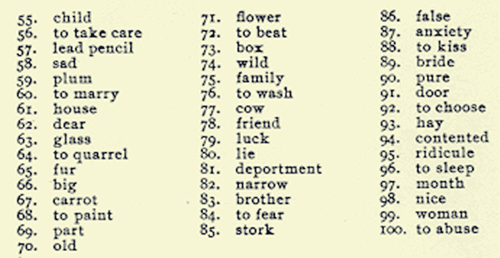
At any given moment, our bodies are responding to the circumstances of our lives, the sociopolitical situation, our personal histories. We’re often unaware, at the conscious level, of all that our bodies are holding. But our body always knows.
How can we can begin to touch into the rich storehouse of information that our body is holding us? Simply learning to sit down with ourselves and ask “how am I doing?” is not particularly complicated, but it can take a little patience.
Coming home to what is already true
It’s true that the body is, as Jung wrote, “a doubtful friend.” It is a relentless truth-teller; a companion we can never shake; the source of much pain and grievance in our lives. We resist hearing its messages because, we shy away from what is painful and hard. We’d rather not know.
At the same time, we are already aware, on some level, of the truths our body holds.
“What is true is already so. Owning up to it doesn’t make it worse. Not being open about it doesn’t make it go away. And because it’s true, it is what is there to be interacted with. Anything untrue isn’t there to be lived. People can stand what is true, for they are already enduring it.”
—Eugene Gendlin, Focusing
When we can look directly at what we’re already experiencing, rather than feeling worse, there is an almost-inevitable sense of relief.
In the video below, you can join me to visualize clearing some space (a practice adapted from Eugene Gendlin’s Focusing technique) to explore your inner landscape. There’s no wrong way to do this. In fact, once you’ve done this a time or two, you’ll find your own way that you prefer to ask, “what’s going on with me today?”
I hope you enjoy this exploration. As always, I look forward to hearing about your experience, and any thoughts and feelings that arise for you.
Until next time!
XO, Laura Beth