



I’m not talking about meditation, although that’s another kind of doing nothing. I’m talking about the kind of doing nothing where you’re incredibly uncomfortable— where you’re experiencing so much tension, a situation has become unbearable, it feels as though you must absolutely do something, anything, and yet you deliberately do nothing.
In 1999, I had just graduated from college with my BA in Spanish. I had no idea what to do with my life. I was living in San Antonio and working as a bank teller— the only job I could find— and chain-smoking cigarettes while I played online roleplaying games until the early hours of the morning. I’d broken up with my boyfriend of three years and had no useful prospects. I felt trapped by my own bad choices and couldn’t see a way forward that made any sense at all. The tension of not knowing how to be an adult was bigger than I was.
So, in a plot twist nobody (including me) saw coming, I entered a whirlwind romance with a guy I had disliked throughout my college career— the absolute wrongest wrong person I could have picked— because it was at least something. We were married within a matter of months.
Now, this guy was a Rush Limbaugh fan who loved making inappropriate jokes; who was the life of the party, but not the kind of guy you’d want to housesit for you. But he was incredibly charming, and I was (temporarily) relieved of the tension I’d been feeling. I had done something! I was a wife! I had a purpose— I could clean the apartment and make Spam for dinner! This was sort of working (okay, not really),until, in the second month of our marriage, he lost his job for sexual harassment. And I woke up one day to the realization that this good-looking, smooth-talking man, was not only (at least sometimes) a total creep, but also a raging alcoholic.
What happened next was just another link in the chain of a series of knee-jerk decisions that moved me out of one kind of tension into another. I searched out all the bottles in the house, hurled them down the stairs of our third floor apartment to crash on the concrete in a satisfyingly dramatic way, put my stuff in a car, and never went back. While I’d relieved one kind of tension (an unhappy marriage), of course, I soon found myself in another.
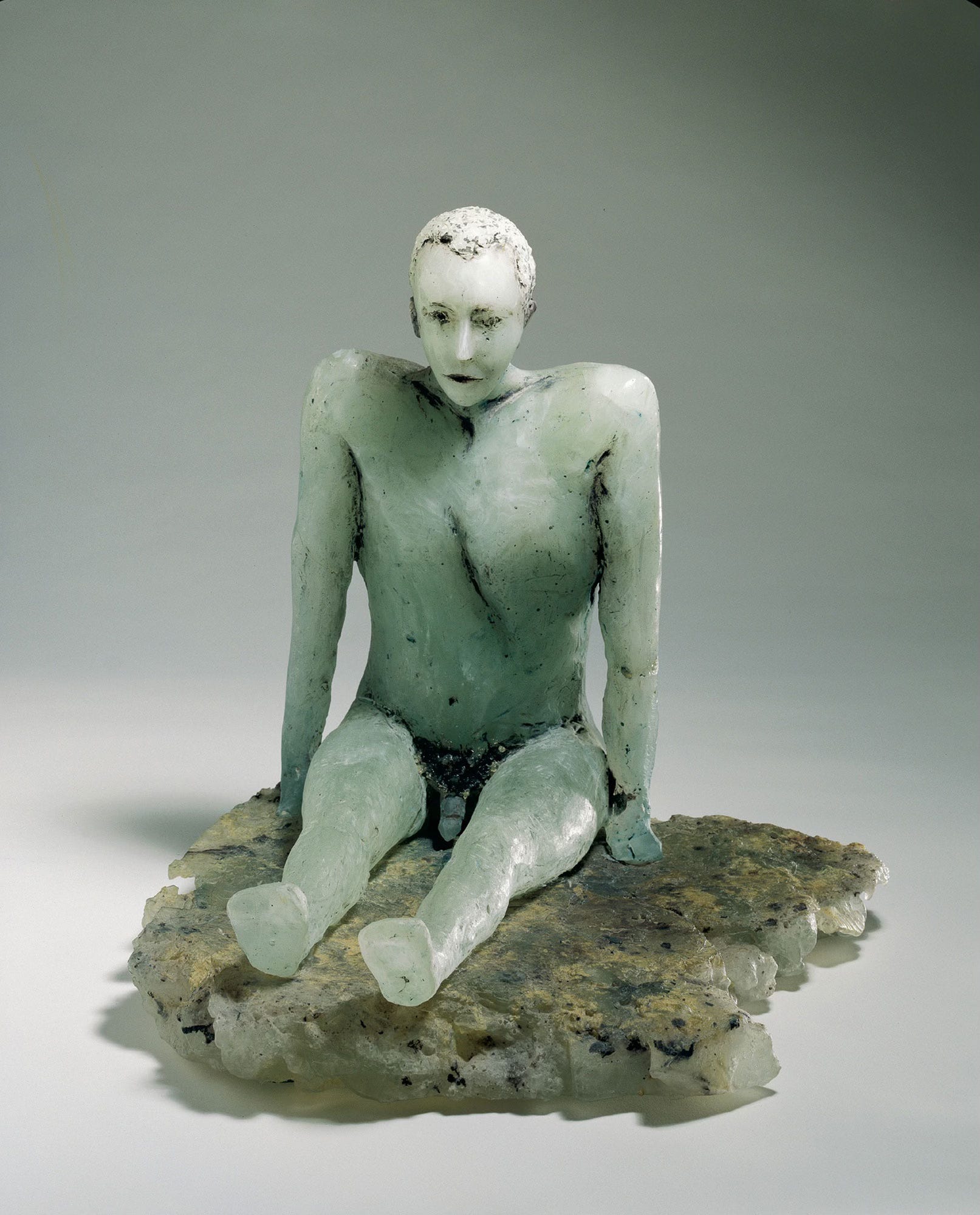
The neurobiology of tension
Experiencing tension in the body is a normal part of our physiology. Our muscles tense when we are experiencing fear or anxiety— ready to propel us into flight or curl us up into a ball. Adaptive patterns of breathing (normal when we’re under stress) can make us feel tension in our neck and shoulders. Shallow breathing, faster heart rate— these are all signs that something critical is happening and we need to do something in response to it. We’re wired to experience tension as a sign that we should move.
Yet psychic tension— the feeling that something is wrong in our lives, or that there’s a potential threat we should be aware of— isn’t always something we need to resolve immediately. Often we don’t have enough information; the danger hasn’t yet arrived; or we are experiencing that tension as a sign of inner growth. Doing something different— creating a new pattern— is very uncomfortable. It requires that we manage our own discomfort long enough to try something scary, something new. At 21 years old, I wasn’t ready to do that yet, so I fell back on an old pattern of codependence. As the quote says, ““Change happens when the pain of staying the same is greater than the pain of change.” I wasn’t there yet.
Tolerating tension as spiritual work
A few months ago, I wrote about the difficulty of holding opposing beliefs, and how our ability to do this is what allows a new point of view, or new way of being, to emerge. Without this ability, we remain stuck in black-and-white thinking, projecting our shadow onto others. I have a lot (and I mean, a LOT) of regrets about my younger years. I wish I’d handled that marriage differently, from start to finish. I recognize now that, as lousy as it looks in hindsight, I was doing the best I could. I simply could not handle that discomfort, and my attempts to relieve the suffering, to escape the tension— like the broken glass at the bottom of the stairs— were collateral damage for others to deal with.
The greater our capacity for discomfort and tension, the greater the possibility that we’ll respond with wisdom rather than react out of fear.
Jung was once asked whether he thought there would be an atomic war in our time. He said,
“I think it depends on how many people can stand the tension of the opposites in themselves. If enough can do so, I think the situation will just hold, and we shall be able to creep around innumerable threats and thus avoid the worst catastrophe of all: the final clash of opposites in an atomic war. But if there are not enough and such a war should break out, I am afraid it would inevitably mean the end of our civilization as so many civilizations have ended in the past but on a smaller scale.”
-CG Jung, quoted in Barbara Hannah’s Jung: His Life & Work
Our ability to tolerate the incredible discomfort of living in our divided country may actually be critical to our survival as a nation and to our collective and individual spiritual well-being. Many of the people I work with are struggling to know what to do with what is happening. They’re afraid of the sweeping changes they see in the government. They’re afraid to lose government aid, Medicaid, Medicare, Social Security. They’re afraid of their radicalized neighbors.
Some of us will need to take action to protect ourselves or our families— I’m not arguing against that at all! But for those of us who are not in immediate danger, there can be tremendous benefit to practicing holding that tension so that we are able to respond, rather than react. The potential of Jung’s work is that we can alchemize what feels like impossible tension in ourselves into new possibility, rather than falling into old patterns.
Isometrics teach tension tolerance
Meditation can certainly work as a practice for learning to tolerate tension— it did for me— but at times, when we sit down to work with that tension, we find that it shifts away from us, or we get sleepy, or it’s just not there. In these cases, using a somatic practice to explore our relationship to tension might be more effective.
One way to do this is through isometric contractions.
An isometric contraction is one in which the muscle engages, but doesn’t change its length. If you were to bring your two palms together in front of your chest and push them into each other, that would be an isometric contraction. You can feel your muscles working, but they’re not shortening (as the bicep does when you bring a dumbbell toward your shoulder in a bicep curl— that’s a concentric contraction), nor are they lengthening (as the bicep does when you begin to lower that dumbbell— that’s an eccentric contraction).
Isometrics are great in lots of ways. We can u s them to expand and strengthen ranges of motion, and to teach the brain to recognize and respond to areas of our body where we may have limited awareness. They’re a brilliant strategy for stabilizing joints. And they can also have a short-term analgesic (pain-relieving) effect.
They also work brilliantly for introducing the embodied experience of holding tension in the body. Essentially, in an isometric contraction, we’re bringing the muscle into tension and saying, “now, don’t move.” We’re deliberately introducingan activated state and then holding ourselves there— just as though we were caught in a stress response and not allowed to move.
I’ve worked with folks who dissociated immediately; others become angry, panicky, dizzy, or nauseous as they held the position. Some folks will simply stop. In all these cases, the nervous system is screaming “GET ME OUT OF HERE!” There’s nothing abnormal or wrong about these responses— it’s simply each individual’s system’s way of coping with what feels like an intolerable situation.
The somatic exploration of tolerating tension
So how do we use these skillfully to practice holding that tension? First, we work at a lower intensity— just 5 or 10% of our max effort. This gives our system a chance to breathe with and adjust to the activation. For many people, just engaging at this low effort is really hard. They want to engage everything they have, right away, and then have to stop when it’s exhausting and frustrating (why, yes, this is a metaphor for how they might handle other things in their lives!).
The practice here is just to feel our muscles working a little bit, hold the discomfort for slightly longer than we’d like, and then to rest. In that rest, we look for the sensations of muscles un-tensing. This part alone can be quite instructive for folks who tend to hold ongoing tension in their bodies. It might feel unfamiliar or unpleasant if we’re not used to it. Some folks might want to just practice engaging briefly and letting go to learn how to make that transition.
After a few reps (10-15 sec of holding), check in again with your body and see how you’re feeling. Give yourself permission to move now in a way that feels good— if you’ve been holding an isometric with the kettlebell (as in the video below), go ahead and pick it up— enjoy the feeling of using your strength and energy to make something happen!
If you’re just getting started with this kind of work, you might want to try using a stick as I demonstrate in this post (scroll down to the first video at the bottom!). Otherwise, a kettlebell, heavier dumbbell, or even a piece of furniture work well:
If you give this a try, I’d love to hear about your experience— or anything else you’d like to share. Thanks for reading, and I’ll see you next week.
Thank you so much for sharing this post. Really enjoyed it.
Thank you so much for sharing this empowering post, Laura. ( I became emotional when I tried the palms exercise, and that surprised me :) 🙏🏻