


As Jennifer Snowdon and I are planning next month’s 4-week seminar on “Better Breathing for Trauma,” we’re both thinking about what we’d most like to share with you, and what we’ve learned since the last time we offered it. This material can be hard to market because it’s complex and nuanced. Neither of us has ever felt good about offering one-size-fits-all solutions, quick-fixes, dramatic promises, or “hacks.” We’ve both worked with enough actual humans to know that none of those are going to work. What we do have to share is based both in science and lived experience. If you enjoy this post, maybe you’ll want to join us next month.

Triumph over nature?
This morning marks the beginning of Daylight Savings Time here in the US. My body is not fooled. It knows what time it feels like. And yet, if I want to participate in society, I must override that instinctual knowing and move forward in my day, minus one hour.
Jung said,
“…(T)riumph over nature is dearly paid for. Nature requires no explanations of principle, but asks only for tolerance and wise measure.” —CG Jung, “The Eros Theory,” CW 7
Nature cannot long be tricked, reasoned with, overridden, or dominated.
But boy, do we love to try. My social media feed is chock-full of suggestions for ways to “optimize” or “hack” our way into better health, from supplements to mindfulness interventions. As I said in the post below, much of this messaging is based in shame and fear, appealing to our deepest desire to be loved and accepted. Sadly, ultimately, most of these approaches are doomed, because they fail to acknowledge what Jung knew: the human body, the human psyche, cannot be dominated, but must be treated with “tolerance and wise measure.” Not as easy to sell.
Self-Optimization is a Poor Substitute for Individuation

Is there anything more seductive than the idea of self-optimization? The idea that if we could just…get…it…right… we’d have finally have the energy of a happy toddler, the razor-sharp brain of a chess prodigy, the strength and power of a slow-motion Clydesdale shaking its mane in a Budweiser commercial. Or whatever you’d…
Everyone wants to be regulated
Nowhere is this rule— that nature cannot long be held back— more true than when we are talking about our survival instincts. Our deepest animal need is to stay alive— a neurobiological drive that is always in play, no matter how “safe” our logical minds may tell us we are.
Our systems never cease scanning for potential threats, and preparing to respond to them. At the first sign of danger, we shift into our sympathetic nervous system. Our adrenal glands release epinephrine, norepinephrine, and cortisol. Our heart rate and blood pressure increase; our pupils dilate to improve vision. Our “non-essential” systems— immune, digestive and reproductive— pause as blood flow is directed to our muscles. At the same time, our breathing becomes faster and more shallow.
What an incredible life-saving system this is! Yet it has become the bane of our modern existence, largely because for many of us, our sympathetic nervous system is stuck in the “on” position. Not only do we live in a time of unrelenting stress, we each carry a history of past threats that our systems recognize, and respond to. But because we fail to understand— let alone respect— its purpose, we treat it as a nuisance, a flaw. We call it “dysregulation,” and we are so desperate to get ourselves “regulated” again, to “reset the nervous system,” that we will often try anything to make that happen.
Paradoxically, if we could find a way to work with our biology, instead of fighting it, we’d have a better chance of naturally down-shifting back into the parasympathetic nervous system.
Have you tried taking a few deep breaths
Breathing plays a key role in bringing our system back into balance. Because it is the only part of the autonomic nervous system that we can actively control, we often use it as an access point. And that can be quite helpful.
Many of you have probably already learned some basic breathing techniques, from “take a deep breath” to “box breathing” or “lengthen your exhales.” These can be quite helpful, in certain contexts. But for some of us— and in some other contexts— you may have noticed that these techniques don’t always work the way we want them to.
One of the reasons (and I think it’s a big one, actually) is that trying to impose an external breathing pattern on a system that’s already in high alert is a lot like someone telling you to “just calm down” when you’re panicking.
I don’t know about you, but I’ve never found that to be helpful.
Your nervous system is smarter than you think
Remember that our breathing— along with our entire nervous system— is designed to respond to perceived external stressors. That’s a feature, not a bug. If your breath doesn’t change in response to a threat, you’ve got much bigger problems. The deeper truth is that sometimes we need to change something else before the breath itself can change.
Creating a greater sense of stability and safety is the simplest thing we can do to help someone else shift their breathing patterns or move out of fight-or-flight, but we often miss this step because we don’t know how to do it.
Here’s the biggest nervous system hack of all: acknowledging that the situation is stressful or feels dangerous can be helpful in settling our system.
If you think back to a time that you were with someone who validated your feelings, or where you felt deeply seen, and understood, you already know this truth. When someone mirrors our inner world, we feel less isolated and fearful. Our system automatically settles and our breath shifts itself.
Many of my clients are individuals who have spent their lives knowing or seeing truths others did not (as in the Cassandra complex— see below). They experienced gaslighting from their family system, or their culture (as many folks in marginalized identities do when the cultural narrative fails to match their lived experience).
Trauma survivors experience this in a profound way, especially when family secrets are involved. Their body knows a truth that others’ do not, yet it is consistently denied by everyone around them. The situation is further complicated when the individual learns to deny their own truth, effectively gaslighting themselves, in an attempt to resolve their existential tension.
“Taking a deep breath” isn’t going to get it, y’all.
For these individuals, simply acknowledging the reality of the situation can have a profound settling effect.
Cassandra’s Curse: The Dubious Gift of Seeing the Unseen

The palm trees in my neighborhood are dying.
What it means to be seen
By saying to others, or ourselves:
“I believe you.”
“It’s not wrong to feel what you feel.”
“It makes sense that you’re having this experience.”
We take away the extra layer of shame and anxiety that accompanies the threat.
Sometimes, there’s an instant feeling of relief that translates into a more “regulated” system. For others, who’ve never had their needs mirrored, it can take much longer to trust the experience. Over time, this process establishes a sense of self-trust and agency that feels more stable and safe-- even though external circumstances have not changed.
When “hacks” become “accidental gaslighting”
If we are always telling ourselves, or our clients, that they need to change their breath when they appear anxious, we are unconsciously denying their reality. We’re communicating to our system that it will not be supported in the crisis it’s experiencing. No matter how good our intentions are, it can feel like we’re saying, “you’re wrong, you’re wrong” every time anxiety appears.
What about “irrational fears,” you’re wondering? When you— or someone else— “shouldn’t” be afraid? The same rules apply. Each of us has our own triggers and reasons for feeling threatened. Nobody gets anxious “for no reason.”
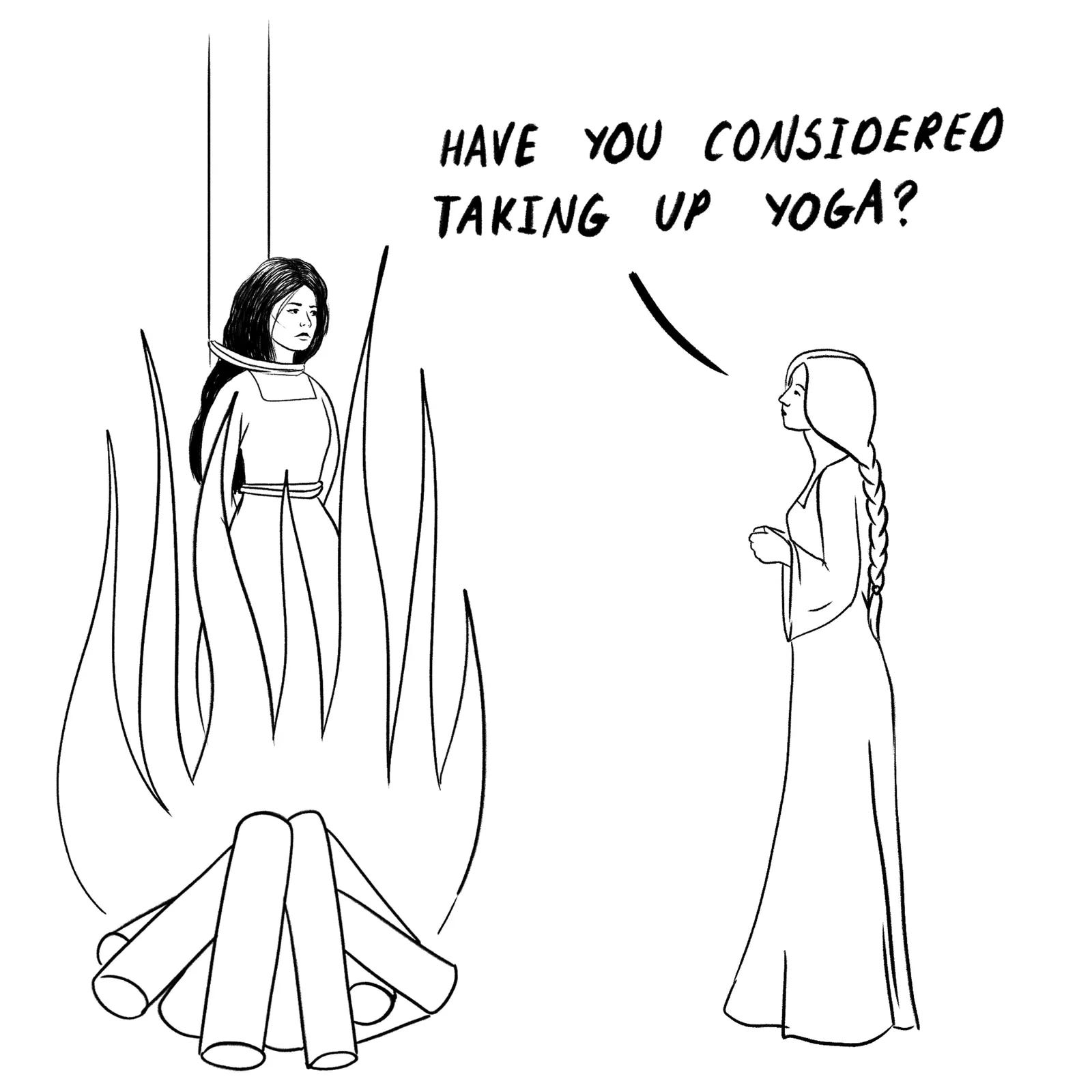
By acknowledging and listening to the underlying pattern, we provide space for that pattern to shift on its own, rather than trying to force it into compliance before it’s ready.
Breathing techniques can still be useful
That doesn’t mean that there’s not a place for breathing techniques— they’re a critical part of re-establishing a greater felt sense of safety in our bodies, and we’ve got some great things to share with you in next month’s webinar series— but it’s important to know what they can and cannot do.
Breathing techniques:
Cannot override a deep core belief that something is wrong;
Will not change the reality of external circumstances, or the inner truths we live with;
Are not a substitute for a felt sense of safety and stability in our bodies.
Before we attempt to create change in our bodies or souls, we must first acknowledge the reality of the situation as we experience it. Until we do, any new strategy will never stick. We must, as Jung said, give Nature the “tolerance and wise measure” she requires.
Need to read this 17 times to get it all..so powerful, resonant, wise and helpful....when I am in a trauma place..and someone tells me to breathe or calm down ...it really enrages me and fuels my panic..
I love teaching this series with you, Laura. And I’m grateful for all you bring to it!